Istanbul Ottoman Imperial
Turkey · Ottoman imperial architecture of Istanbul
Domed Mosques, Timber Yalı Waterfront Mansions & Byzantine-Ottoman Synthesis
Definition
Istanbul Ottoman Imperial is a regional architectural identity from Turkey. Domed Mosques, Timber Yalı Waterfront Mansions & Byzantine-Ottoman Synthesis.
- Country
- Turkey
- Region
- Ottoman imperial architecture of Istanbul.
- Massing
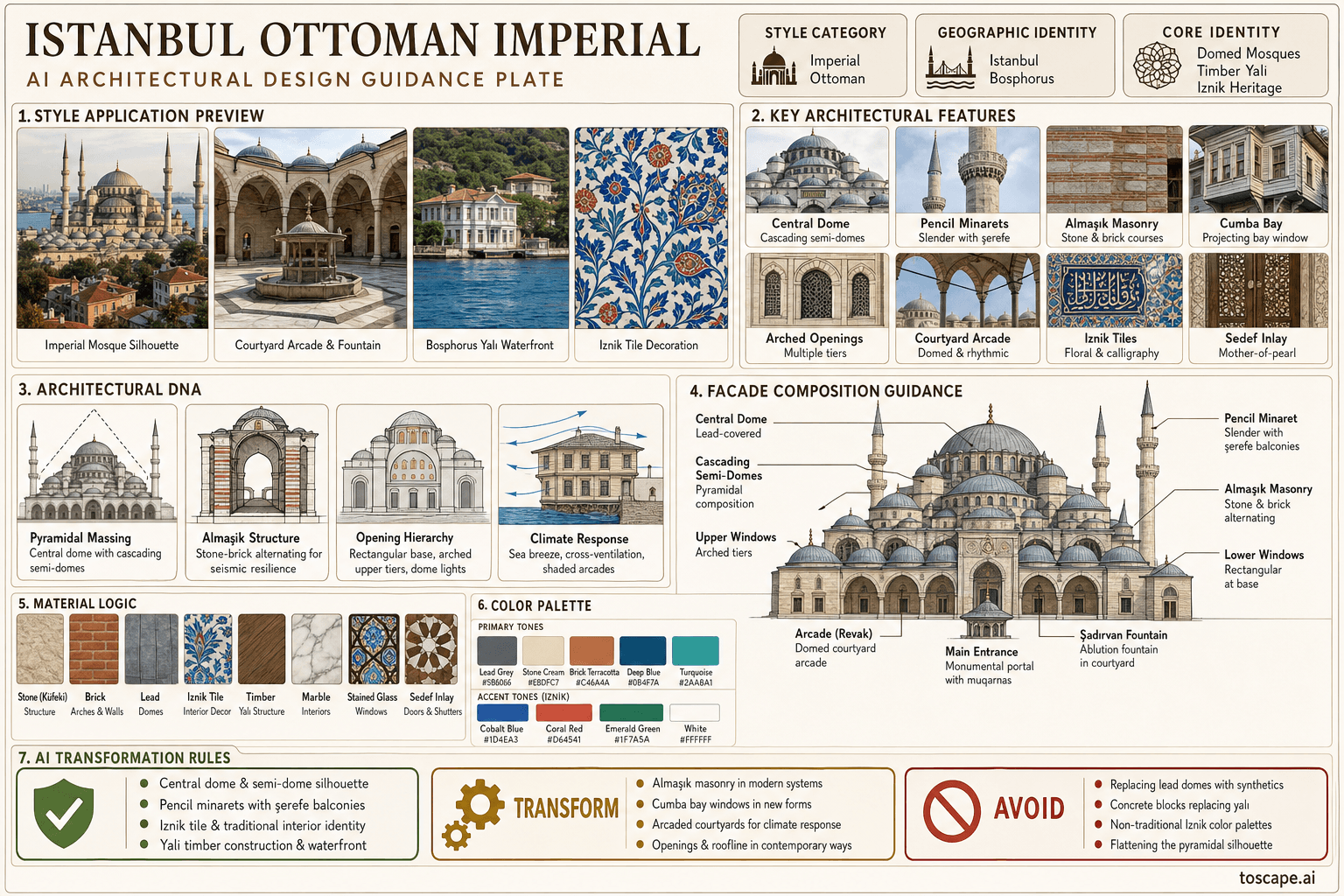
- Imperial mosque: central main dome on pendentives, cascading semi-domes and exedra, courtyard (avlu) with arcade and şadırvan fountain, multiple slender minarets.
- Materials
- Stone (küfeki limestone) — main structural walls and piers. Brick — arches, domes, alternating courses.
- Palette
- Stone gray, weathered timber brown, mineral white, muted charcoal, and restrained landscape greens define the palette.
- Climate response
- Mediterranean/Black Sea transitional: humid, moderate rainfall, seismic zone. Domed mosque: tall central volume for passive cooling via stack effect, multiple window tiers for cross-ventilation.
Try it free
Render your own project in this style
Upload one photo of your own project and Re-Render keeps the geometry and camera while carrying the Istanbul Ottoman Imperial language into materials, proportion, and detail. Three free renders, no account needed.
Open Re-Render - freeOverview
Istanbul Ottoman Imperial is a regional architectural identity in Turkey. Ottoman imperial architecture of Istanbul — the capital of two empires built across seven hills on the Bosphorus. Central domed mosque typology with cascading semi-domes (Sinan masterwork), pencil minarets, timber yalı waterfront mansions along the Bosphorus, Iznik tile decoration, stone and brick alternating construction (almaşık)
Visual DNA
Massing & Form
Imperial mosque: central main dome on pendentives, cascading semi-domes and exedra, courtyard (avlu) with arcade and şadırvan fountain, multiple slender minarets. Süleymaniye (Sinan, 1557): dome 26m diameter, 53m height on four massive piers.
Facade Language
Mosque: pyramidal massing — cascading domes and semi-domes descending from central dome, rhythmic arched windows, stone-brick alternation on walls. Courtyard arcade: rhythmic domed bays with pointed arches.
Materials & Texture
Stone (küfeki limestone) — main structural walls and piers. Brick — arches, domes, alternating courses.
Color Palette
Stone gray, weathered timber brown, mineral white, muted charcoal, and restrained landscape greens define the palette. The building should feel rooted in terrain and craft rather than coated in synthetic contrast.
Ornament & Detail
Iznik tiles: floral (tulip, carnation, rose, hyacinth), arabesque, and calligraphic panels — 16th-century apogee. Painted decoration (kalem işi): floral and geometric on domes, arches, and walls.
Climate Response
Mediterranean/Black Sea transitional: humid, moderate rainfall, seismic zone. Domed mosque: tall central volume for passive cooling via stack effect, multiple window tiers for cross-ventilation.
Landscape & Ground
Ottoman imperial architecture of Istanbul — the capital of two empires built across seven hills on the Bosphorus. Mediterranean/Black Sea transitional: humid, moderate rainfall, seismic zone.
Reference elevation
Istanbul Ottoman Imperial — characteristic facade composition, Ottoman imperial architecture of Istanbul.
Context Snapshot
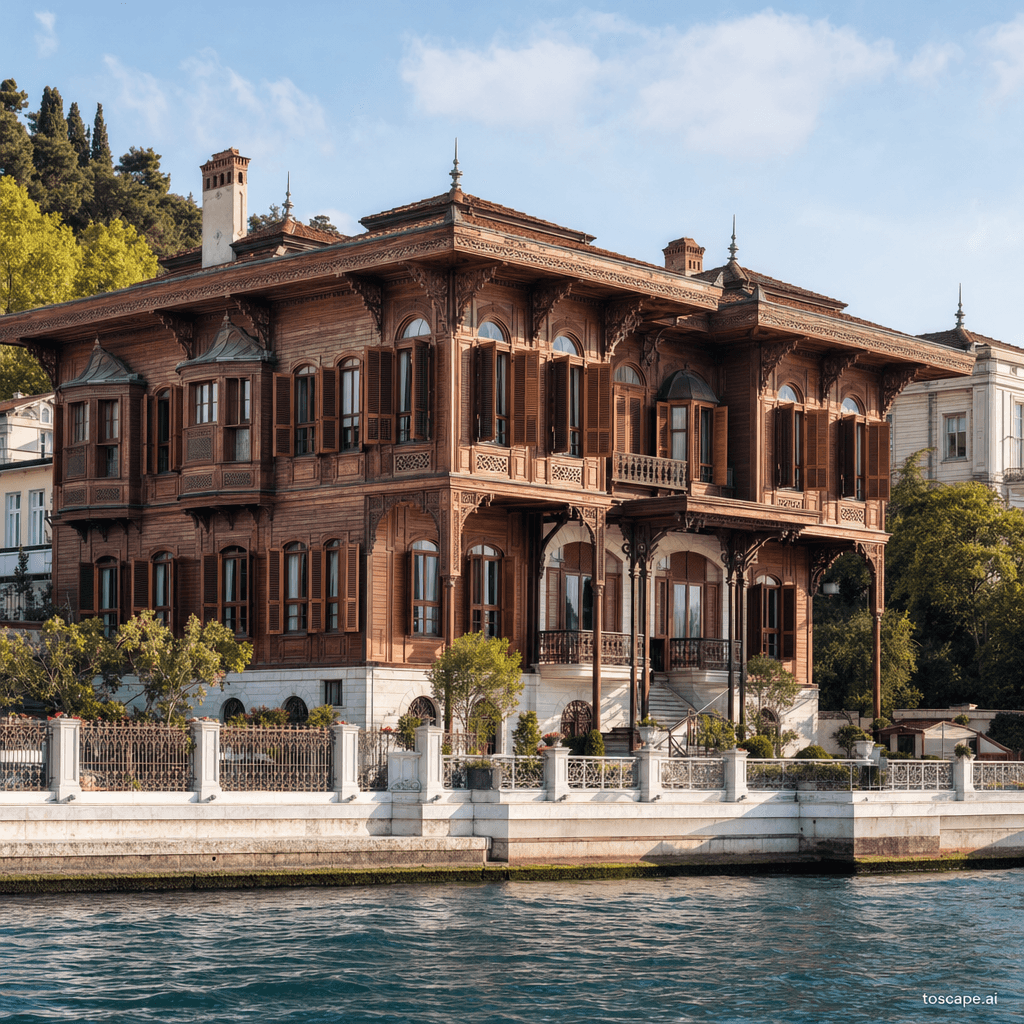
Ottoman imperial architecture of Istanbul — the capital of two empires built across seven hills on the Bosphorus Mediterranean/Black Sea transitional: humid, moderate rainfall, seismic zone.
Contemporary Relevance
Istanbul Ottoman Imperial is useful today for residential, hospitality, civic, and place-branding work that needs Turkey-specific character grounded in local massing, material tone, climate response, and settlement logic rather than generic international styling.
Use this style in Toscape
Explore Istanbul Ottoman Imperial directly inside Toscape using the Facade Re-Style and Design Options workflows.
Open Istanbul Ottoman Imperial in the galleryFrequently asked questions
What is Istanbul Ottoman Imperial?
Istanbul Ottoman Imperial is a regional architectural identity from Turkey. Domed Mosques, Timber Yalı Waterfront Mansions & Byzantine-Ottoman Synthesis.
What materials define Istanbul Ottoman Imperial?
Stone (küfeki limestone) — main structural walls and piers. Brick — arches, domes, alternating courses.
What is the Istanbul Ottoman Imperial color palette?
Stone gray, weathered timber brown, mineral white, muted charcoal, and restrained landscape greens define the palette. The building should feel rooted in terrain and craft rather than coated in synthetic contrast.
Where does Istanbul Ottoman Imperial come from?
Ottoman imperial architecture of Istanbul — the capital of two empires built across seven hills on the Bosphorus Mediterranean/Black Sea transitional: humid, moderate rainfall, seismic zone.
When should architects use Istanbul Ottoman Imperial?
Istanbul Ottoman Imperial is useful today for residential, hospitality, civic, and place-branding work that needs Turkey-specific character grounded in local massing, material tone, climate response, and settlement logic rather than generic international styling.
How do you render Istanbul Ottoman Imperial in Toscape?
Load your project image in Toscape, select the Istanbul Ottoman Imperial reference, and process the run. The Facade Re-Style and Design Options workflows preserve the existing geometry and viewpoint while redirecting materials, proportion, and detail toward Istanbul Ottoman Imperial.
Other regional identities from Turkey
- Cappadocia Cave DwellingRock-Cut Architecture, Fairy Chimney Cones & Volcanic Tuff Troglodyte Settlements.
- Eastern Anatolia StoneBasalt Masonry, Double-Height Hayat Courtyards & Severe Winter Highland Architecture.
- Mardin Artuqid StoneGolden Limestone Cascading City, Carved Masonry & Mesopotamian Hilltop Architecture.
- Mediterranean CoastalLimestone Houses, Timber Balconies & Lycian-Greek-Anatolian Coastal Synthesis.
- Aegean WhitewashedCuboid Stone Houses, Blue-Trim Windows & Olive-Grove Mediterranean Architecture.
- Black Sea TimberSteep-Roofed Wooden Houses, Serander Granaries & Lush Pontic Coast Architecture.