Kwazulu-Natal
South Africa · dual architectural traditions of KwaZulu-Natal
The Zulu beehive hut and the veranda architecture of the Indian Ocean coast — iQhugwane grass domes, the Victorian veranda bungalow, and the enduring Zulu-Nguni spatial traditions...
Definition
Kwazulu-Natal is a regional architectural identity from South Africa. The Zulu beehive hut and the veranda architecture of the Indian Ocean coast — iQhugwane grass domes, the Victorian veranda bungalow, and the enduring Zulu-Nguni spatial traditions.
- Country
- South Africa
- Region
- dual architectural traditions of KwaZulu-Natal.
- Massing
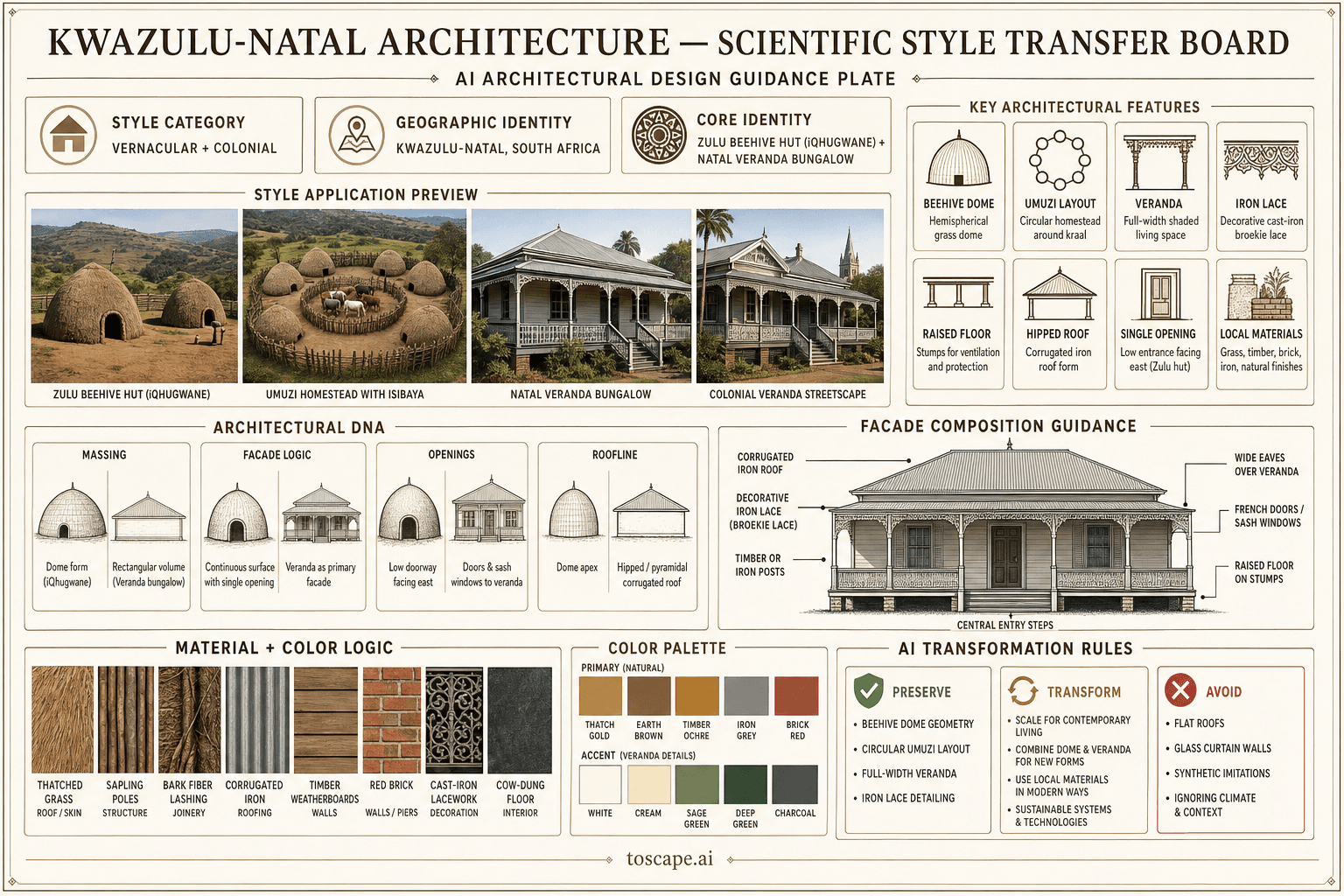
- The Zulu iQhugwane is a perfect hemispherical dome — one of the purest geometric forms in world vernacular architecture.
- Materials
- The Zulu iQhugwane — a hemispherical grass dome (3–6 m diameter, 2–4 m interior height) formed by a framework of sapling poles (izintingo) bent and lashed.
- Palette
- Stone gray, weathered timber brown, mineral white, muted charcoal, and restrained landscape greens define the palette.
- Climate response
- The dual architectural traditions of KwaZulu-Natal — the indigenous Zulu beehive hut (iQhugwane) and the colonial British-Victorian veranda architecture of Durban, Pietermaritzburg, and the Midlands.
Overview
Kwazulu-Natal is a regional architectural identity in South Africa. The dual architectural traditions of KwaZulu-Natal — the indigenous Zulu beehive hut (iQhugwane) and the colonial British-Victorian veranda architecture of Durban, Pietermaritzburg, and the Midlands. These two traditions — the grass-domed homestead (umuzi) and the timber-iron veranda bungalow — define the architectural identity of South Africa's most populous province, representing the pre-colonial African vernacular...
Visual DNA
Massing & Form
The Zulu iQhugwane is a perfect hemispherical dome — one of the purest geometric forms in world vernacular architecture. The dome (3–6 m diameter × 2–4 m interior height) is constructed by bending sapling poles into arches and lashing them with bark fiber, creating a self-supporting geodesic-like basket frame.
Facade Language
The Zulu hut has no "facade" in the Western sense — the dome presents a continuous grass surface. The single low doorway (facing east, toward the rising sun) is the only opening — a dark aperture in the textured gold-brown grass surface.
Materials & Texture
The Zulu iQhugwane — a hemispherical grass dome (3–6 m diameter, 2–4 m interior height) formed by a framework of sapling poles (izintingo) bent and lashed into a dome, thatched with layered grass (utshani) — the hut is a self-supporting tensile basket-dome — arranged in a circular homestead (umuzi) with a central cattl...
Color Palette
Stone gray, weathered timber brown, mineral white, muted charcoal, and restrained landscape greens define the palette. The building should feel rooted in terrain and craft rather than coated in synthetic contrast.
Ornament & Detail
The Zulu iQhugwane — a hemispherical grass dome (3–6 m diameter, 2–4 m interior height) formed by a framework of sapling poles (izintingo) bent and lashed into a dome, thatched with layered grass (utshani) — the hut is a self-supporting tensile basket-dome — arranged in a circular homestead (umuzi) with a central cattl...
Climate Response
The dual architectural traditions of KwaZulu-Natal — the indigenous Zulu beehive hut (iQhugwane) and the colonial British-Victorian veranda architecture of Durban, Pietermaritzburg, and the Midlands. These two traditions — the grass-domed homestead (umuzi) and the timber-iron veranda bungalow — define the architectural...
Landscape & Ground
The dual architectural traditions of KwaZulu-Natal — the indigenous Zulu beehive hut (iQhugwane) and the colonial British-Victorian veranda architecture of Durban, Pietermaritzburg, and the Midlands. These two traditions — the grass-domed homestead (umuzi) and the timber-iron veranda bungalow — define the architectural...
Reference elevation
Kwazulu-Natal — characteristic facade composition, dual architectural traditions of KwaZulu-Natal.
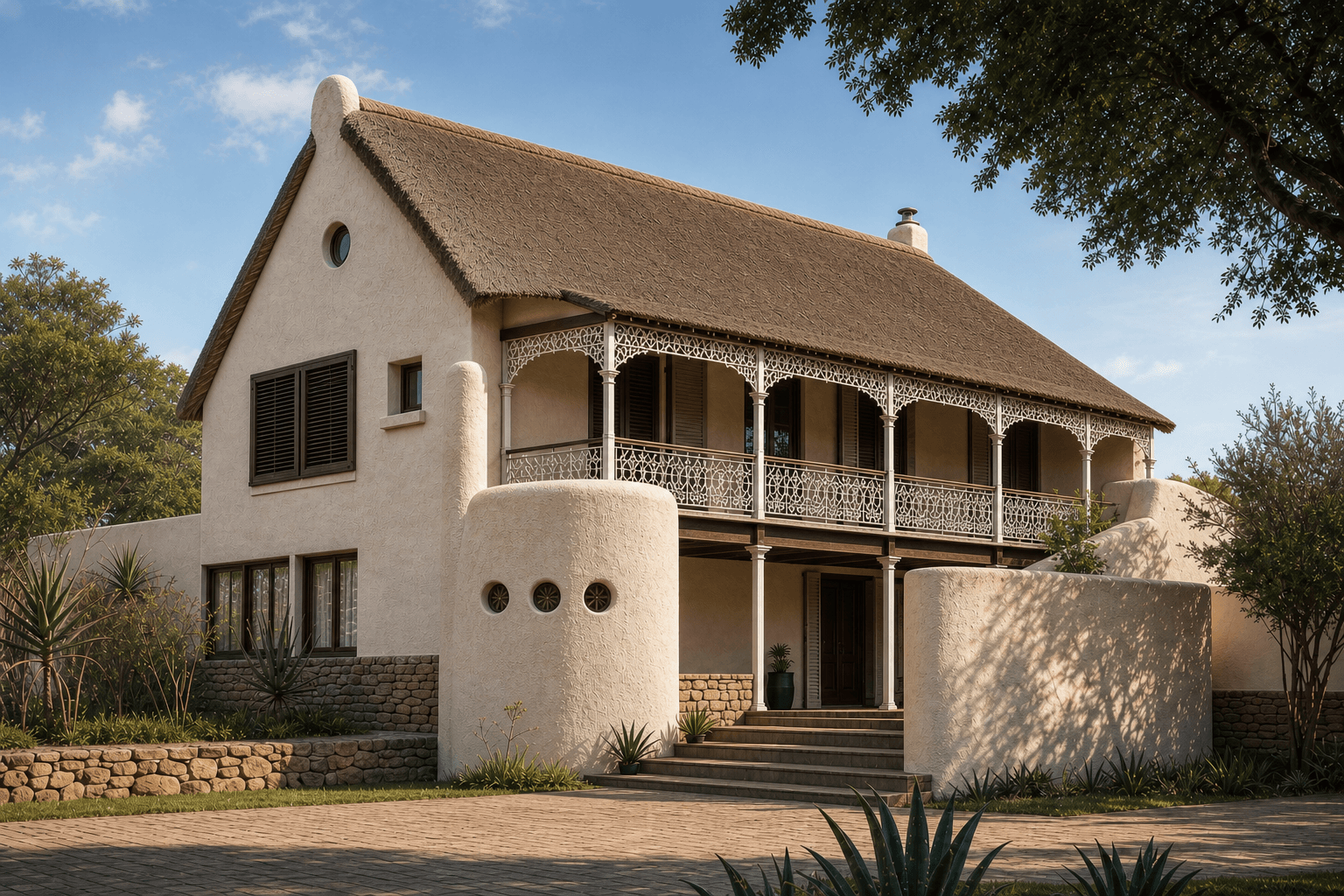
Context Snapshot
The dual architectural traditions of KwaZulu-Natal — the indigenous Zulu beehive hut (iQhugwane) and the colonial British-Victorian veranda architecture of Durban, Pietermaritzburg, and the Midlands.
Contemporary Relevance
Kwazulu-Natal is useful today for residential, hospitality, civic, and place-branding work that needs South Africa-specific character grounded in local massing, material tone, climate response, and settlement logic rather than generic international styling.
Use this style in Toscape
Explore Kwazulu-Natal directly inside Toscape using the Facade Re-Style and Design Options workflows.
Open Kwazulu-Natal in the galleryFrequently asked questions
What is Kwazulu-Natal?
Kwazulu-Natal is a regional architectural identity from South Africa. The Zulu beehive hut and the veranda architecture of the Indian Ocean coast — iQhugwane grass domes, the Victorian veranda bungalow, and the enduring Zulu-Nguni spatial traditions.
What materials define Kwazulu-Natal?
The Zulu iQhugwane — a hemispherical grass dome (3–6 m diameter, 2–4 m interior height) formed by a framework of sapling poles (izintingo) bent and lashed into a dome, thatched with layered grass (utshani) — the hut is a self-supporting tensile basket-dome — arranged in a circular homestead (umuzi) with a central cattl.
What is the Kwazulu-Natal color palette?
Stone gray, weathered timber brown, mineral white, muted charcoal, and restrained landscape greens define the palette. The building should feel rooted in terrain and craft rather than coated in synthetic contrast.
Where does Kwazulu-Natal come from?
The dual architectural traditions of KwaZulu-Natal — the indigenous Zulu beehive hut (iQhugwane) and the colonial British-Victorian veranda architecture of Durban, Pietermaritzburg, and the Midlands.
When should architects use Kwazulu-Natal?
Kwazulu-Natal is useful today for residential, hospitality, civic, and place-branding work that needs South Africa-specific character grounded in local massing, material tone, climate response, and settlement logic rather than generic international styling.
How do you render Kwazulu-Natal in Toscape?
Open Toscape on Windows, load your own photo, elevation, sketch, or CAD view, then apply the Kwazulu-Natal reference from the built-in style library. The Facade Re-Style and Design Options workflows keep your project geometry and camera while shifting materials, proportion, and detailing toward Kwazulu-Natal.