Lower Saxony
Germany · Lower Saxony / Niedersachsen
North German Brick Gothic, Fachhallenhaus & Lowland Red-Brick Vernacular
Definition
Lower Saxony is a regional architectural identity from Germany. North German Brick Gothic, Fachhallenhaus & Lowland Red-Brick Vernacular.
- Country
- Germany
- Region
- Lower Saxony / Niedersachsen.
- Massing
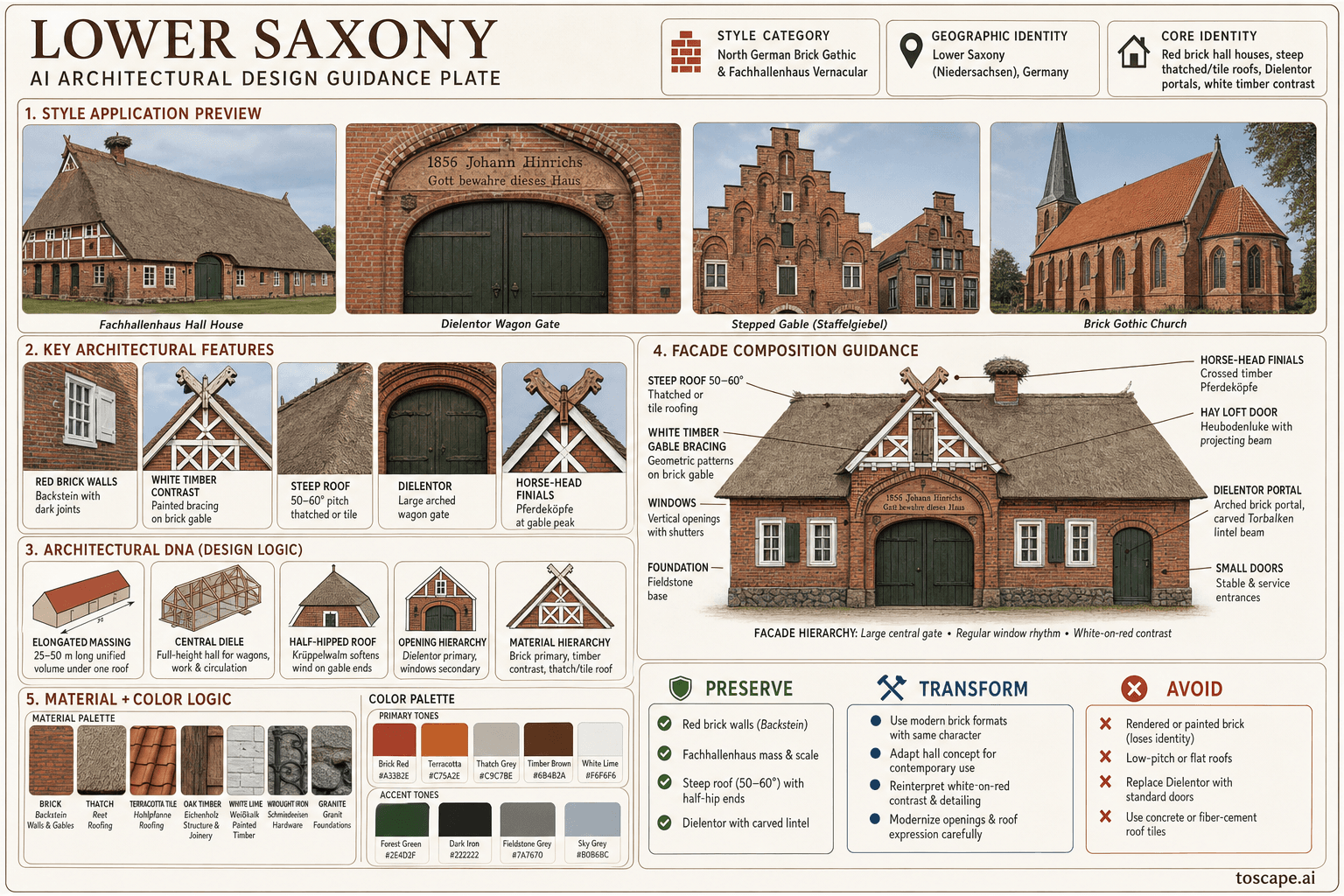
- Fachhallenhaus (Low German hall house): the defining typology — a single massive elongated rectangular volume (25-50m long.
- Materials
- Backstein (fired brick): warm red-brown, with dark grey-black lime mortar joints — the fundamental material identity.
- Palette
- White, cream, pale sand, warm timber, and shadow-driven dark metal accents define the palette.
- Climate response
- North German lowland plain: maritime-influenced continental, cool wet winters, mild summers, strong westerly winds, high groundwater.
Overview
Lower Saxony is a regional architectural identity in Germany. Lower Saxony / Niedersachsen — Backsteingotik brick architecture and Fachhallenhaus farmhouses. Deep red-brown fired brick (Backstein) load-bearing walls with dark joints, steep terracotta tile or thatched reed roofs (Reetdach), Fachhallenhaus (Low German hall house) — the large barn-dwelling typology with central threshing floor (Diele) and high double doors (Dielentor), brick Gothic churches with pointed arches and...
Visual DNA
Massing & Form
Fachhallenhaus (Low German hall house): the defining typology — a single massive elongated rectangular volume (25-50m long, 8-12m wide) containing dwelling (Flett — hearth room at rear), central threshing floor (Diele — full-height nave-like space), and livestock stalls (Stall — sides of Diele) all under one continuous...
Facade Language
Brick walls in various bond patterns: mostly running bond (Läuferverband) with occasional decorative headers. The brick surface is the primary visual element — warm red-brown with subtle variations in firing color (Brandfarben).
Materials & Texture
Backstein (fired brick): warm red-brown, with dark grey-black lime mortar joints — the fundamental material identity. Reet (reed thatch): Phragmites reed, 30-40cm thick layer, pale silver-grey when weathered — roofing.
Color Palette
White, cream, pale sand, warm timber, and shadow-driven dark metal accents define the palette. The facade should stay bright and climate-aware rather than heavy, gray, or over-saturated.
Ornament & Detail
Brick ornament (Backsteindekor): the primary decorative system — corbel friezes (Konsolfries, Deutsches Band — German band), diamond friezes (Rautenfries), sawtooth courses (Sägezahnfries), blind niches (Blendarkaden), and stepped gables with brick tracery. White-on-red contrast: white-painted timber gable bracing agai...
Climate Response
North German lowland plain: maritime-influenced continental, cool wet winters, mild summers, strong westerly winds, high groundwater. Fachhallenhaus: all functions under one roof for efficiency in wet/windy climate — move from dwelling to stable without going outside.
Landscape & Ground
Lower Saxony / Niedersachsen — Backsteingotik brick architecture and Fachhallenhaus farmhouses. North German lowland plain: maritime-influenced continental, cool wet winters, mild summers, strong westerly winds, high groundwater.
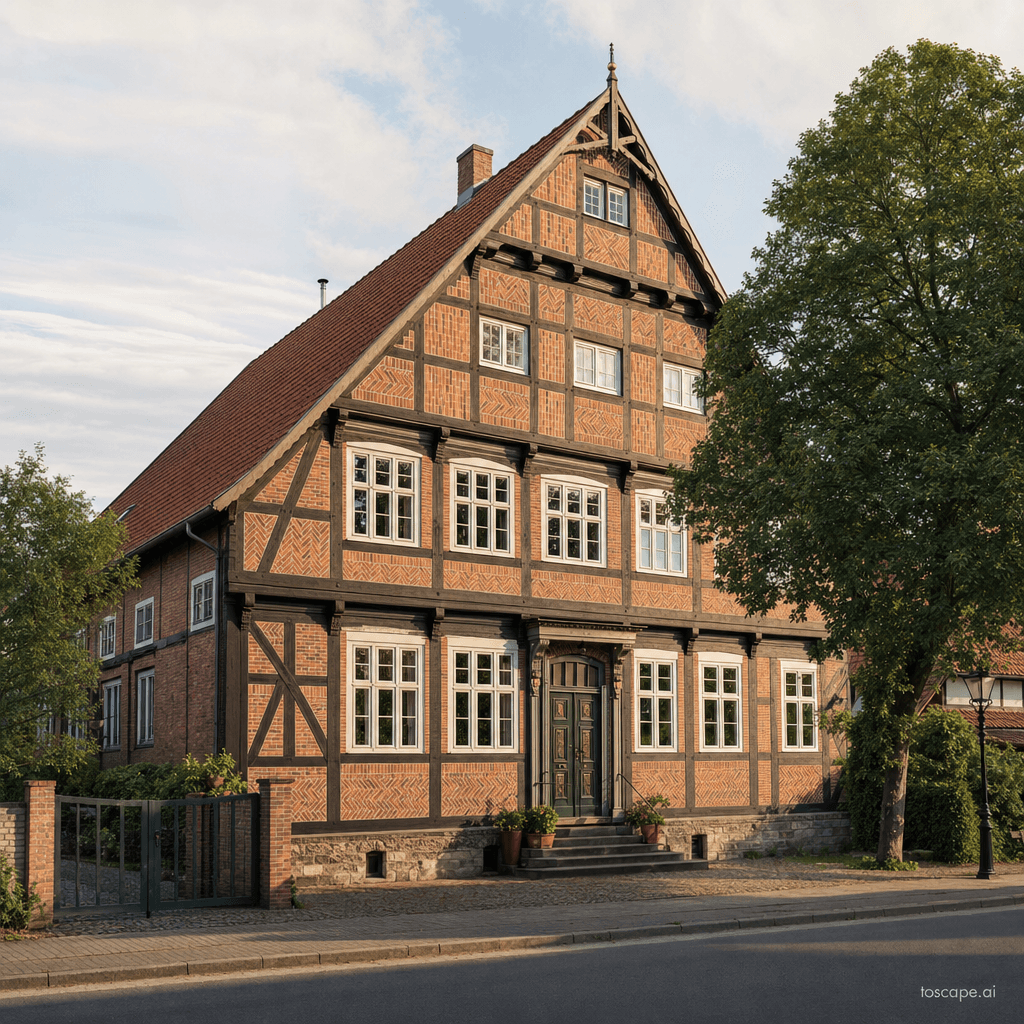
Reference elevation
Lower Saxony — characteristic facade composition, Lower Saxony / Niedersachsen.
Context Snapshot
Lower Saxony / Niedersachsen — Backsteingotik brick architecture and Fachhallenhaus farmhouses North German lowland plain: maritime-influenced continental, cool wet winters, mild summers, strong westerly winds, high groundwater.
Contemporary Relevance
Lower Saxony is useful today for residential, hospitality, civic, and place-branding work that needs Germany-specific character grounded in local massing, material tone, climate response, and settlement logic rather than generic international styling.
Use this style in Toscape
Explore Lower Saxony directly inside Toscape using the Facade Re-Style and Design Options workflows.
Open Lower Saxony in the galleryFrequently asked questions
What is Lower Saxony?
Lower Saxony is a regional architectural identity from Germany. North German Brick Gothic, Fachhallenhaus & Lowland Red-Brick Vernacular.
What materials define Lower Saxony?
Backstein (fired brick): warm red-brown, with dark grey-black lime mortar joints — the fundamental material identity. Reet (reed thatch): Phragmites reed, 30-40cm thick layer, pale silver-grey when weathered — roofing.
What is the Lower Saxony color palette?
White, cream, pale sand, warm timber, and shadow-driven dark metal accents define the palette. The facade should stay bright and climate-aware rather than heavy, gray, or over-saturated.
Where does Lower Saxony come from?
Lower Saxony / Niedersachsen — Backsteingotik brick architecture and Fachhallenhaus farmhouses North German lowland plain: maritime-influenced continental, cool wet winters, mild summers, strong westerly winds, high groundwater.
When should architects use Lower Saxony?
Lower Saxony is useful today for residential, hospitality, civic, and place-branding work that needs Germany-specific character grounded in local massing, material tone, climate response, and settlement logic rather than generic international styling.
How do you render Lower Saxony in Toscape?
Open Toscape on Windows, load your own photo, elevation, sketch, or CAD view, then apply the Lower Saxony reference from the built-in style library. The Facade Re-Style and Design Options workflows keep your project geometry and camera while shifting materials, proportion, and detailing toward Lower Saxony.