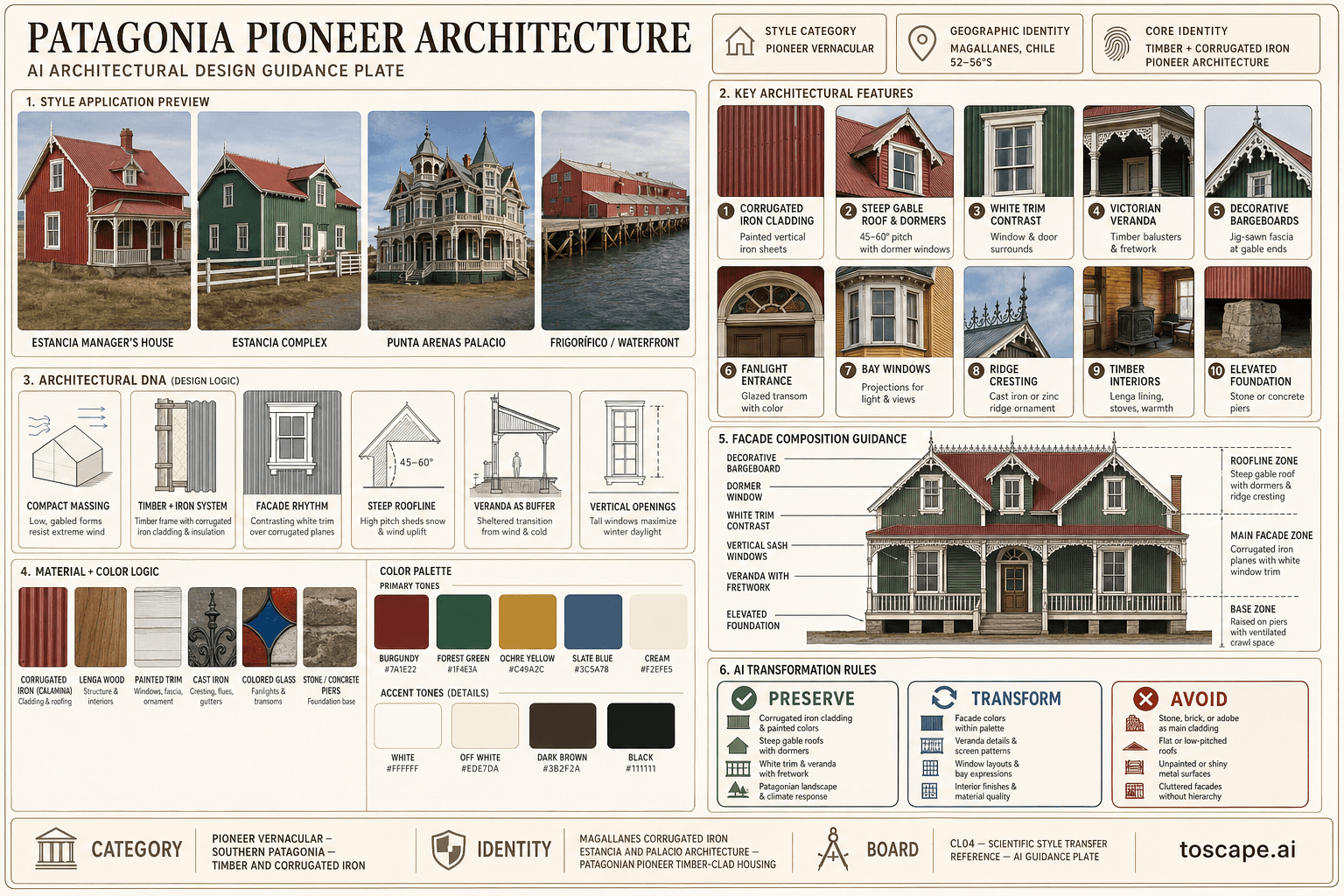
Patagonia Pioneer
Chile · architectural identity of the Magallanes Region (Chilean Patagonia, 52–56°S)
The corrugated iron and timber estancia architecture of Chilean Patagonia — the pioneer settlements of Magallanes where British sheep-farming colonists, Croatian immigrants, and Ch...
Definition
Patagonia Pioneer is a regional architectural identity from Chile. The corrugated iron and timber estancia architecture of Chilean Patagonia — the pioneer settlements of Magallanes where British sheep-farming colonists, Croatian immigrants, and Ch.
- Country
- Chile
- Region
- architectural identity of the Magallanes Region (Chilean Patagonia, 52–56°S).
- Massing
- Patagonian estancia architecture is compact, gabled, and defensive — the extreme wind (regular gusts exceeding 100 km/h) drives a low, hunkered massing.
- Materials
- The palette is industrially pragmatic: (1) Corrugated galvanized iron (calamina) — the universal cladding and roofing, imported from Britain (originally) or produced in Chile.
- Palette
- White, cream, pale sand, warm timber, and shadow-driven dark metal accents define the palette.
- Climate response
- Magallanes (52–56°S) has a subpolar oceanic climate: cold (average 2–11°C), very windy (regular 80–120 km/h gusts, the famous "viento de Magallanes"), moderate precipitation (400–600 mm/year).
Overview
Patagonia Pioneer is a regional architectural identity in Chile. The architectural identity of the Magallanes Region (Chilean Patagonia, 52–56°S) — the estancia (sheep station) architecture of the late 19th and early 20th centuries, defined by timber-framed buildings clad in painted corrugated iron (calamina) with steep gable roofs, dormer windows, and decorative wooden trim — the urban architecture of Punta Arenas (founded 1848), with its grand wooden mansions (palacios de madera...
Visual DNA
Massing & Form
Patagonian estancia architecture is compact, gabled, and defensive — the extreme wind (regular gusts exceeding 100 km/h) drives a low, hunkered massing. Buildings are typically rectangular in plan (10–20 m × 8–15 m), single or one-and-a-half story, with steep roof pitches.
Facade Language
The estancia facade is a composition of corrugated iron planes with white-painted timber trim. The corrugated surface creates a vertical or horizontal linear texture (depending on sheet orientation), catching the low-angle Patagonian light.
Materials & Texture
The palette is industrially pragmatic: (1) Corrugated galvanized iron (calamina) — the universal cladding and roofing, imported from Britain (originally) or produced in Chile, painted with oil-based paints in burgundy (rojo inglés), forest green (verde inglés), ochre, slate blue, or cream. (2) Lenga (Nothofagus pumilio...
Color Palette
White, cream, pale sand, warm timber, and shadow-driven dark metal accents define the palette. The facade should stay bright and climate-aware rather than heavy, gray, or over-saturated.
Ornament & Detail
Patagonian ornament is Victorian timber fretwork adapted to the frontier: (1) Decorative bargeboards — carved or jig-sawn timber fascia boards at the gable ends, often with scalloped or geometric patterns, painted white. (2) Veranda fretwork — the spandrels between veranda posts, cut with jigsaw patterns (circles, diam...
Climate Response
Magallanes (52–56°S) has a subpolar oceanic climate: cold (average 2–11°C), very windy (regular 80–120 km/h gusts, the famous "viento de Magallanes"), moderate precipitation (400–600 mm/year), and extreme seasonal light variation (17+ hours of daylight in December, under 7 hours in June). The architecture responds: (1)...
Landscape & Ground
The architectural identity of the Magallanes Region (Chilean Patagonia, 52–56°S) — the estancia (sheep station) architecture of the late 19th and early 20th centuries, defined by timber-framed buildings clad in painted corrugated iron (calamina) with steep gable roofs, dormer windows, and decorative wooden trim — the u...
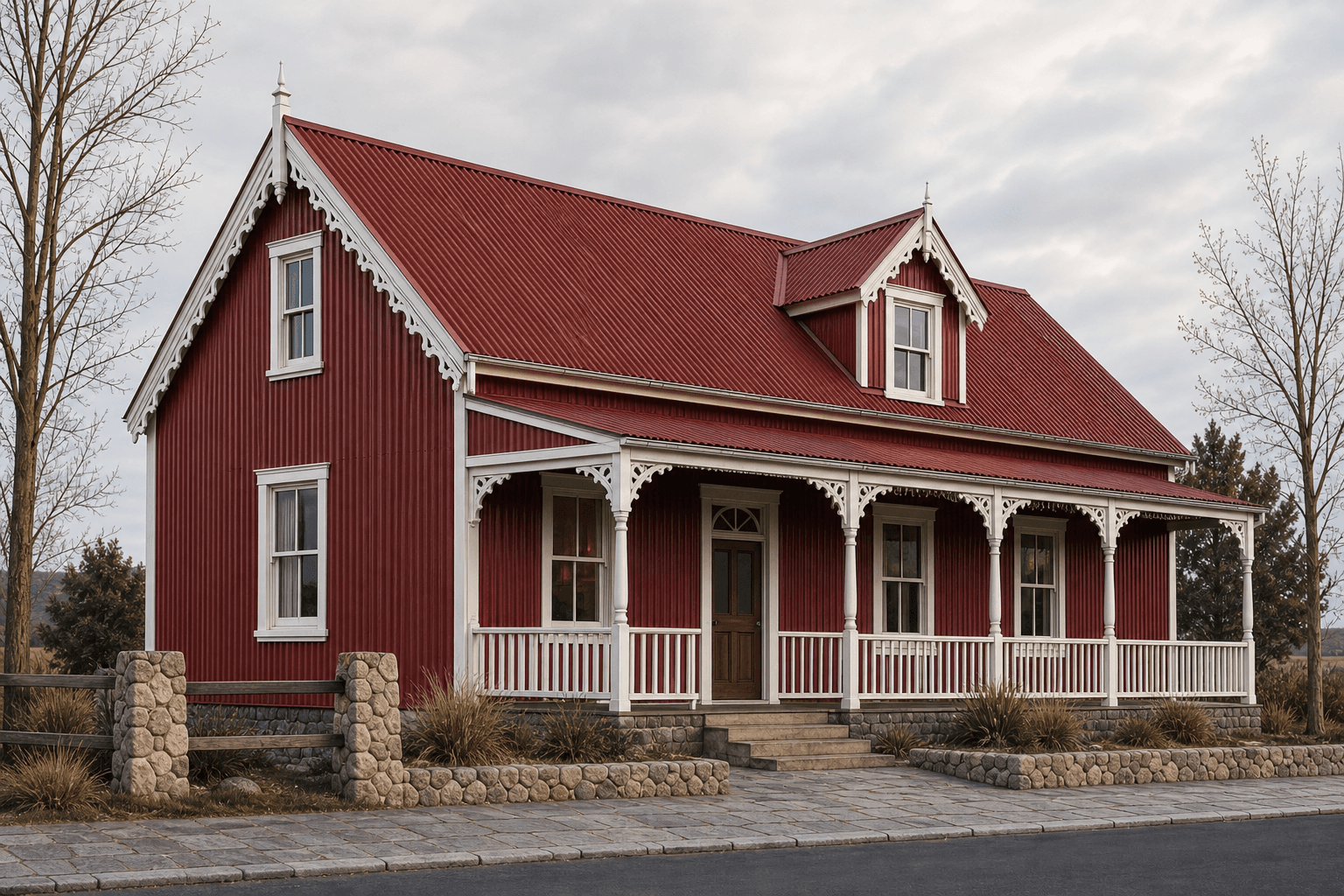
Reference elevation
Patagonia Pioneer — characteristic facade composition, architectural identity of the Magallanes Region (Chilean Patagonia, 52–56°S).
Context Snapshot
The architectural identity of the Magallanes Region (Chilean Patagonia, 52–56°S) — the estancia (sheep station) architecture of the late 19th and early 20th centuries, defined by timber-framed buildin... Magallanes (52–56°S) has a subpolar oceanic climate: cold (average 2–11°C), very windy (regular 80–120 km/h gusts, the famous "viento de Magallanes"), moderate precipitation (400–600 mm/year), and extreme seasonal light...
Contemporary Relevance
Patagonia Pioneer is useful today for residential, hospitality, civic, and place-branding work that needs Chile-specific character grounded in local massing, material tone, climate response, and settlement logic rather than generic international styling.
Use this style in Toscape
Explore Patagonia Pioneer directly inside Toscape using the Facade Re-Style and Design Options workflows.
Open Patagonia Pioneer in the galleryFrequently asked questions
What is Patagonia Pioneer?
Patagonia Pioneer is a regional architectural identity from Chile. The corrugated iron and timber estancia architecture of Chilean Patagonia — the pioneer settlements of Magallanes where British sheep-farming colonists, Croatian immigrants, and Ch.
What materials define Patagonia Pioneer?
The palette is industrially pragmatic: (1) Corrugated galvanized iron (calamina) — the universal cladding and roofing, imported from Britain (originally) or produced in Chile, painted with oil-based paints in burgundy (rojo inglés), forest green (verde inglés), ochre, slate blue, or cream. (2) Lenga (Nothofagus pumilio.
What is the Patagonia Pioneer color palette?
White, cream, pale sand, warm timber, and shadow-driven dark metal accents define the palette. The facade should stay bright and climate-aware rather than heavy, gray, or over-saturated.
Where does Patagonia Pioneer come from?
The architectural identity of the Magallanes Region (Chilean Patagonia, 52–56°S) — the estancia (sheep station) architecture of the late 19th and early 20th centuries, defined by timber-framed buildin... Magallanes (52–56°S) has a subpolar oceanic climate: cold (average 2–11°C), very windy (regular 80–120 km/h gusts, the famous "viento de Magallanes"), moderate precipitation (400–600 mm/year), and extreme seasonal light.
When should architects use Patagonia Pioneer?
Patagonia Pioneer is useful today for residential, hospitality, civic, and place-branding work that needs Chile-specific character grounded in local massing, material tone, climate response, and settlement logic rather than generic international styling.
How do you render Patagonia Pioneer in Toscape?
Open Toscape on Windows, load your own photo, elevation, sketch, or CAD view, then apply the Patagonia Pioneer reference from the built-in style library. The Facade Re-Style and Design Options workflows keep your project geometry and camera while shifting materials, proportion, and detailing toward Patagonia Pioneer.