Rio Grande Do Sul
Brazil · Rio Grande do Sul
Gaúcho Estância, Azorean Stone & Southern Brazilian Pampas Vernacular
Definition
Rio Grande Do Sul is a regional architectural identity from Brazil. Gaúcho Estância, Azorean Stone & Southern Brazilian Pampas Vernacular.
- Country
- Brazil
- Region
- Rio Grande do Sul.
- Massing
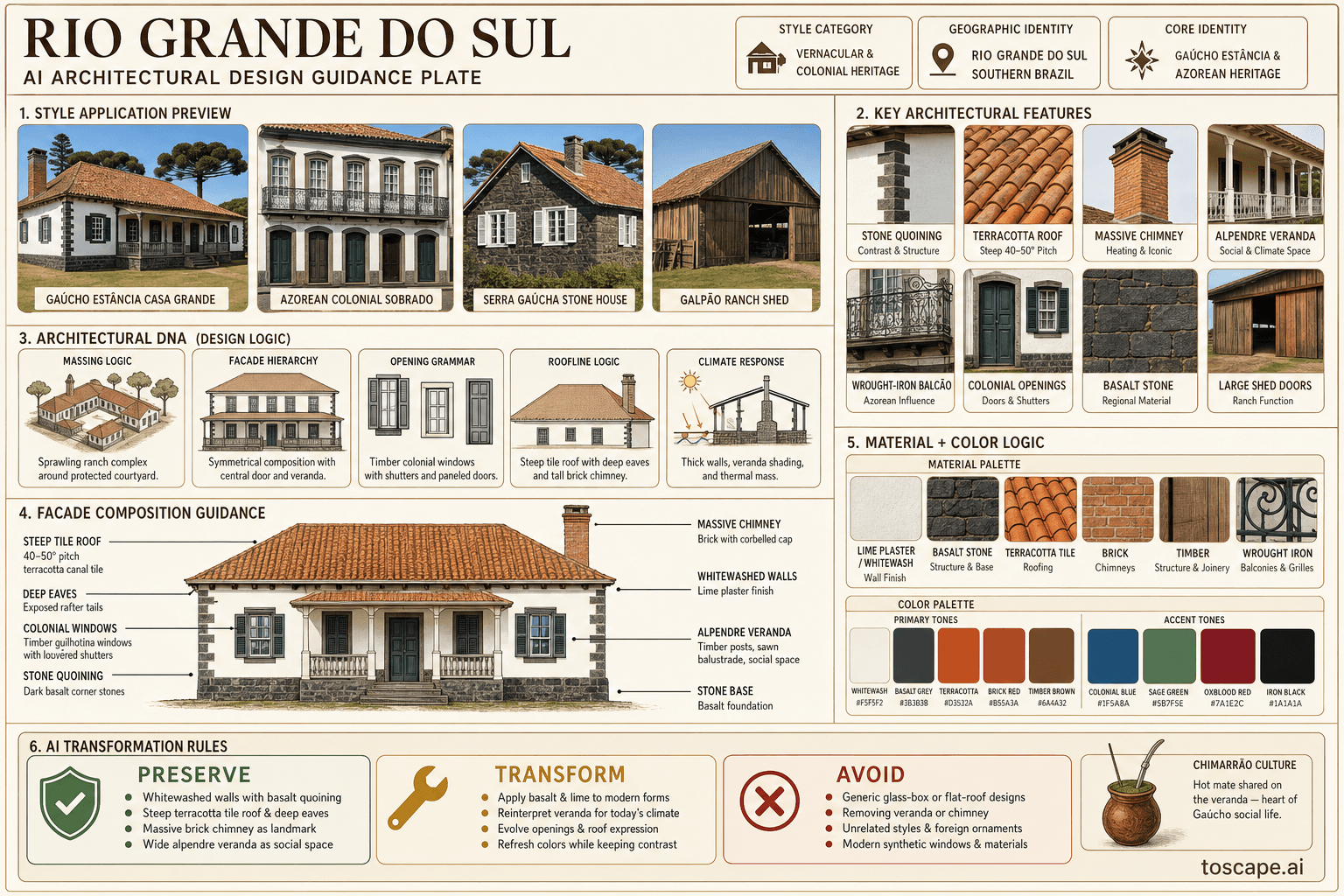
- Estância (ranch): sprawling single-story complex — Casa Grande (main house) with multiple wings around courtyard, detached galpão (work shed/barn) and senzala (quarters).
- Materials
- Pedra basalto/pedra ferro (basalt/ironstone): dark grey to black — walls, foundations, corner quoins, stone curbs.
- Palette
- White, cream, pale sand, warm timber, and shadow-driven dark metal accents define the palette.
- Climate response
- Subtropical with cold winters (geadas — frost common, occasional snow in Serra): coldest region of Brazil, distinct four seasons.
Overview
Rio Grande Do Sul is a regional architectural identity in Brazil. Rio Grande do Sul — Gaúcho ranch architecture and Azorean Portuguese colonial heritage. Heavy basalt stone (pedra basalto/pedra ferro) masonry walls in dark grey-black, whitewashed lime plaster facades with contrasting dark stone corner quoins (cunhais de pedra), Azorean Portuguese-influenced colonial sobrados with continuous balcões (wrought-iron balconies), estância gaúcha ranch complexes with large rammed earth or...
Visual DNA
Massing & Form
Estância (ranch): sprawling single-story complex — Casa Grande (main house) with multiple wings around courtyard, detached galpão (work shed/barn) and senzala (quarters). Rectangular plan elongated, oriented to sun and wind.
Facade Language
Estância Casa Grande: whitewashed walls with stone quoining at corners, symmetrical or near-symmetrical with central door, timber colonial windows with painted shutters (janelas de guilhotina or de abrir com venezianas). Wide alpendre (veranda) across front facade with timber posts.
Materials & Texture
Pedra basalto/pedra ferro (basalt/ironstone): dark grey to black — walls, foundations, corner quoins, stone curbs. The Serra Geral plateau is one of the world's largest basalt formations.
Color Palette
White, cream, pale sand, warm timber, and shadow-driven dark metal accents define the palette. The facade should stay bright and climate-aware rather than heavy, gray, or over-saturated.
Ornament & Detail
Stone quoining (cunhais de pedra): dark basalt corner blocks against white walls — the defining aesthetic ornament, both structural and decorative. Wrought-iron balcony grilles (gradis): Azorean Portuguese scroll patterns — volutes, hearts, geometric curls — each balcony unique.
Climate Response
Subtropical with cold winters (geadas — frost common, occasional snow in Serra): coldest region of Brazil, distinct four seasons. Thick basalt or taipa walls: thermal mass retaining heat in winter, cool in summer.
Landscape & Ground
Rio Grande do Sul — Gaúcho ranch architecture and Azorean Portuguese colonial heritage. Subtropical with cold winters (geadas — frost common, occasional snow in Serra): coldest region of Brazil, distinct four seasons.
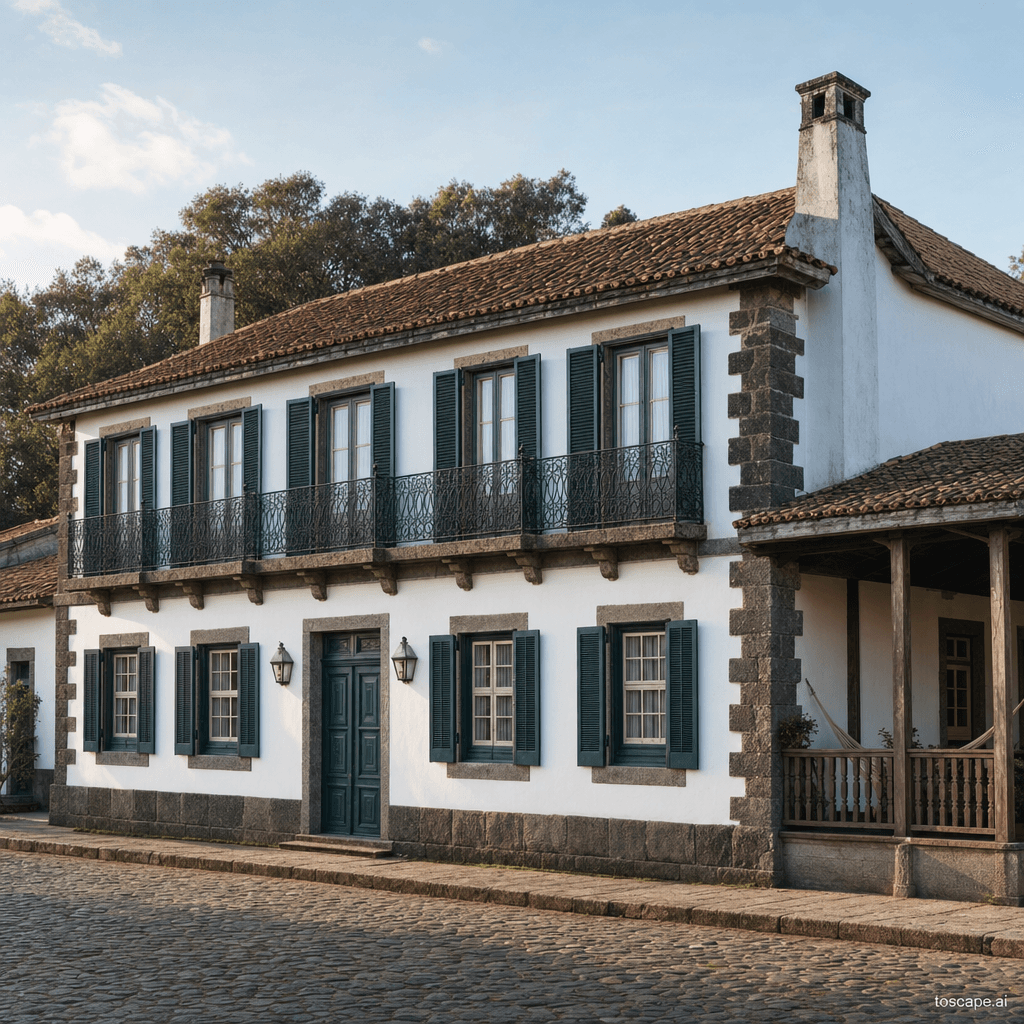
Reference elevation
Rio Grande Do Sul — characteristic facade composition, Rio Grande do Sul.
Context Snapshot
Rio Grande do Sul — Gaúcho ranch architecture and Azorean Portuguese colonial heritage Subtropical with cold winters (geadas — frost common, occasional snow in Serra): coldest region of Brazil, distinct four seasons.
Contemporary Relevance
Rio Grande Do Sul is useful today for residential, hospitality, civic, and place-branding work that needs Brazil-specific character grounded in local massing, material tone, climate response, and settlement logic rather than generic international styling.
Use this style in Toscape
Explore Rio Grande Do Sul directly inside Toscape using the Facade Re-Style and Design Options workflows.
Open Rio Grande Do Sul in the galleryFrequently asked questions
What is Rio Grande Do Sul?
Rio Grande Do Sul is a regional architectural identity from Brazil. Gaúcho Estância, Azorean Stone & Southern Brazilian Pampas Vernacular.
What materials define Rio Grande Do Sul?
Pedra basalto/pedra ferro (basalt/ironstone): dark grey to black — walls, foundations, corner quoins, stone curbs. The Serra Geral plateau is one of the world's largest basalt formations.
What is the Rio Grande Do Sul color palette?
White, cream, pale sand, warm timber, and shadow-driven dark metal accents define the palette. The facade should stay bright and climate-aware rather than heavy, gray, or over-saturated.
Where does Rio Grande Do Sul come from?
Rio Grande do Sul — Gaúcho ranch architecture and Azorean Portuguese colonial heritage Subtropical with cold winters (geadas — frost common, occasional snow in Serra): coldest region of Brazil, distinct four seasons.
When should architects use Rio Grande Do Sul?
Rio Grande Do Sul is useful today for residential, hospitality, civic, and place-branding work that needs Brazil-specific character grounded in local massing, material tone, climate response, and settlement logic rather than generic international styling.
How do you render Rio Grande Do Sul in Toscape?
Open Toscape on Windows, load your own photo, elevation, sketch, or CAD view, then apply the Rio Grande Do Sul reference from the built-in style library. The Facade Re-Style and Design Options workflows keep your project geometry and camera while shifting materials, proportion, and detailing toward Rio Grande Do Sul.