São Paulo
Brazil · São Paulo state
Paulista Modernism, Bandeirante Taipa & Brazilian Concrete Urbanism
Definition
São Paulo is a regional architectural identity from Brazil. Paulista Modernism, Bandeirante Taipa & Brazilian Concrete Urbanism.
- Country
- Brazil
- Region
- São Paulo state
- Massing
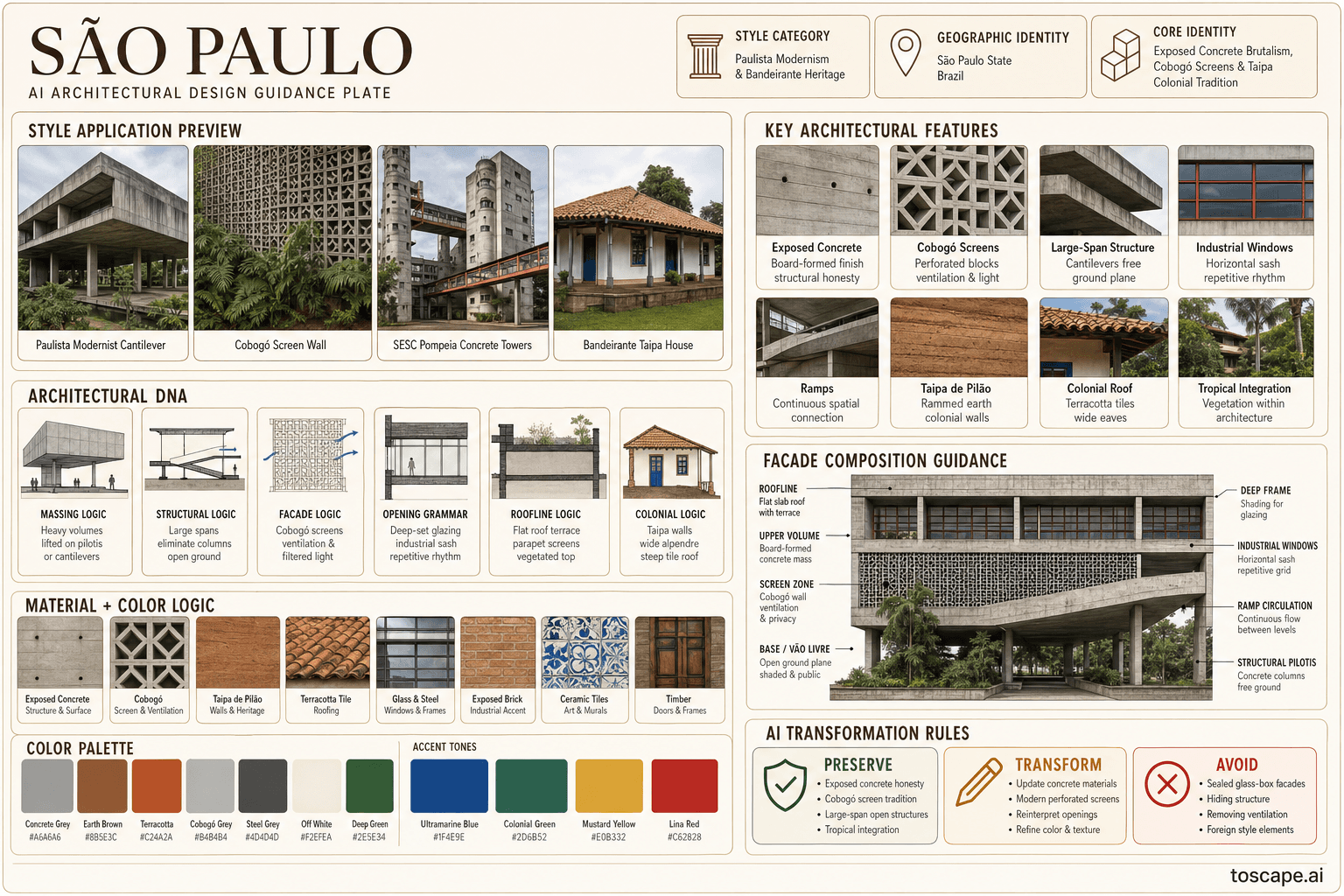
- Paulista School: heavy monolithic volumes — expressed structure as architectural form. Large-span beams (20-30m) cantilevering dramatically over open ground plane.
- Materials
- Concreto aparente (exposed concrete): board-formed grey — the signature Paulista surface. Taipa de pilão (rammed earth): warm brown-red ochre layered earth walls.
- Palette
- Warm earth, sandy beige, ochre, clay brown, and sun-softened mineral tones should dominate, with palm green or weathered timber as secondary accents.
- Climate response
- Subtropical highland (700-800m): mild year-round (15-28°C), wet summer, dry winter, moderate humidity.
Overview
São Paulo is a regional architectural identity in Brazil. São Paulo state — Paulista modern architecture and bandeirante colonial heritage. Paulista School (Escola Paulista) brutalist exposed concrete (concreto aparente) with bold structural expression — Vilanova Artigas, Paulo Mendes da Rocha, Lina Bo Bardi — heavy monolithic volumes with large-span beams and cantilevers, SESC Pompeia raw concrete towers, MASP suspended span, colonial bandeirante taipa de pilão (rammed ear...
Visual DNA
Massing & Form
Paulista School: heavy monolithic volumes — expressed structure as architectural form. Large-span beams (20-30m) cantilevering dramatically over open ground plane.
Facade Language
Paulista brutalist: large expanses of board-formed concrete (marcas de fôrma — horizontal timber grain texture) punctuated by deep-set windows or full-height glazing. Cobogó screen walls as ventilated exterior skin casting geometric shadow patterns.
Materials & Texture
Concreto aparente (exposed concrete): board-formed grey — the signature Paulista surface. Taipa de pilão (rammed earth): warm brown-red ochre layered earth walls.
Color Palette
Warm earth, sandy beige, ochre, clay brown, and sun-softened mineral tones should dominate, with palm green or weathered timber as secondary accents. The palette should read as land-derived rather than polished or urban-generic.
Ornament & Detail
Structural expression as ornament — concrete beam lines, column capitals, formwork texture patterns (horizontal timber grain, tie-hole marks). Cobogó geometric patterns: abstract compositions in full-wall screen blocks — the primary decorative element.
Climate Response
Subtropical highland (700-800m): mild year-round (15-28°C), wet summer, dry winter, moderate humidity. Cobogó screen walls: ventilated facade — air flow with filtered light, essential in humid summer.
Landscape & Ground
São Paulo state — Paulista modern architecture and bandeirante colonial heritage. Subtropical highland (700-800m): mild year-round (15-28°C), wet summer, dry winter, moderate humidity.
Reference elevation
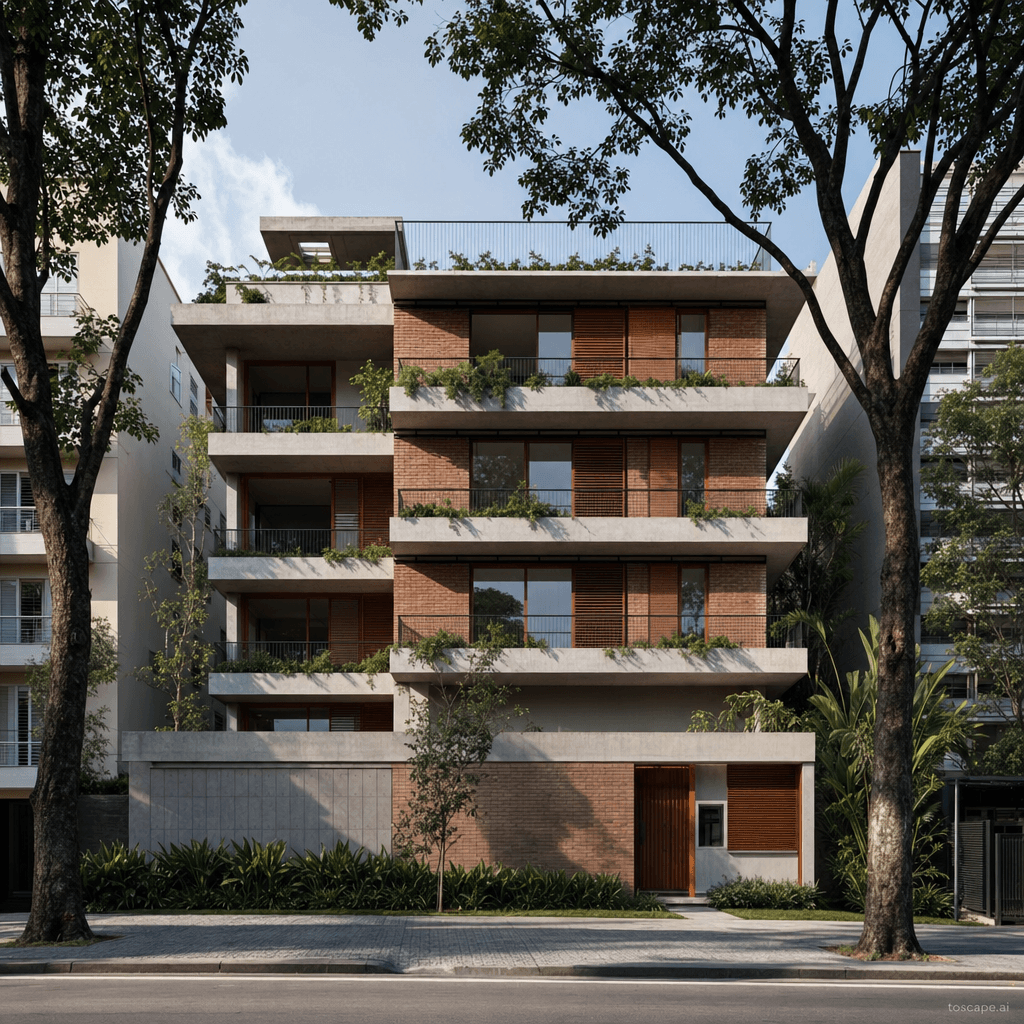
São Paulo — characteristic facade composition, São Paulo state.
Context Snapshot
São Paulo state — Paulista modern architecture and bandeirante colonial heritage Subtropical highland (700-800m): mild year-round (15-28°C), wet summer, dry winter, moderate humidity.
Contemporary Relevance
São Paulo is useful today for residential, hospitality, civic, and place-branding work that needs Brazil-specific character grounded in local massing, material tone, climate response, and settlement logic rather than generic international styling.
Use this style in Toscape
Explore São Paulo directly inside Toscape using the Facade Re-Style and Design Options workflows.
Open São Paulo in the galleryFrequently asked questions
What is São Paulo?
São Paulo is a regional architectural identity from Brazil. Paulista Modernism, Bandeirante Taipa & Brazilian Concrete Urbanism.
What materials define São Paulo?
Concreto aparente (exposed concrete): board-formed grey — the signature Paulista surface. Taipa de pilão (rammed earth): warm brown-red ochre layered earth walls.
What is the São Paulo color palette?
Warm earth, sandy beige, ochre, clay brown, and sun-softened mineral tones should dominate, with palm green or weathered timber as secondary accents. The palette should read as land-derived rather than polished or urban-generic.
Where does São Paulo come from?
São Paulo state — Paulista modern architecture and bandeirante colonial heritage Subtropical highland (700-800m): mild year-round (15-28°C), wet summer, dry winter, moderate humidity.
When should architects use São Paulo?
São Paulo is useful today for residential, hospitality, civic, and place-branding work that needs Brazil-specific character grounded in local massing, material tone, climate response, and settlement logic rather than generic international styling.
How do you render São Paulo in Toscape?
Open Toscape on Windows, load your own photo, elevation, sketch, or CAD view, then apply the São Paulo reference from the built-in style library. The Facade Re-Style and Design Options workflows keep your project geometry and camera while shifting materials, proportion, and detailing toward São Paulo.