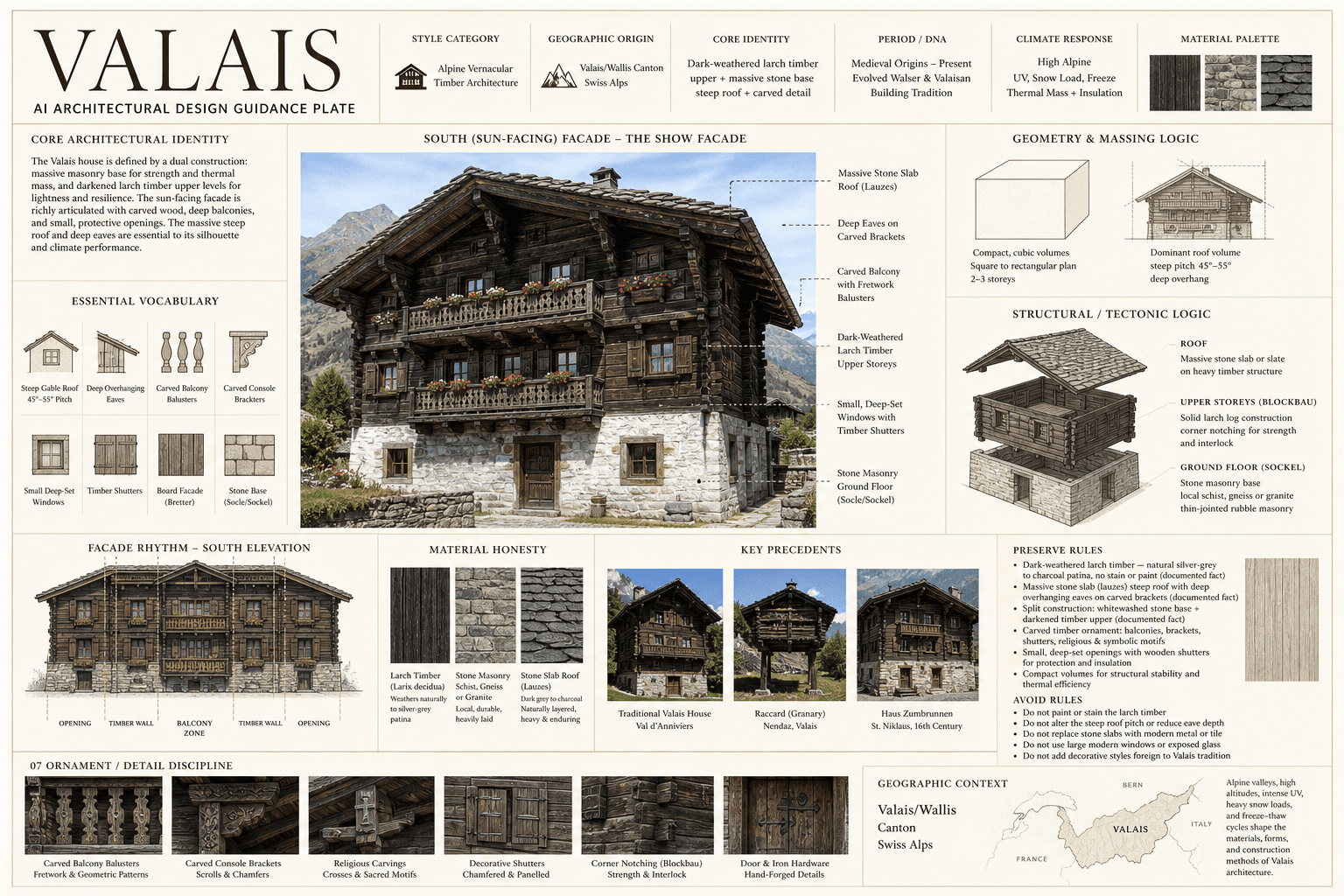
Valais
Switzerland · Valais/Wallis canton
Walser Timber Chalets, Darkened Larch & Alpine Stone-Base Vernacular Architecture
Definition
Valais is a regional architectural identity from Switzerland. Walser Timber Chalets, Darkened Larch & Alpine Stone-Base Vernacular Architecture.
- Country
- Switzerland
- Region
- Valais/Wallis canton
- Massing
- Compact cubic volumes — Valais houses are square to rectangular in plan, typically 2-3 storeys, with a dominant roof volume.
- Materials
- European larch (Larix decidua, mélèze/Lärche): the defining material — naturally durable, high resin content, weathers from warm golden-brown to deep silver-grey to near-black over decades.
- Palette
- White, cream, pale sand, warm timber, and shadow-driven dark metal accents define the palette.
- Climate response
- High alpine — extreme conditions: heavy winter snowfall (often several metres), intense summer UV radiation, large diurnal temperature range, steep mountain terrain (often 30-45° slopes).
Overview
Valais is a regional architectural identity in Switzerland. Valais/Wallis canton — Walser and Valaisan timber chalet architecture, raccard granaries, and alpine stone-base vernacular. Darkened silver-grey to near-black larch (mélèze/Lärche) timber — the defining Valais building timber, weathered to a deep charcoal-silver patina by intense alpine UV — used for solid timber blockbau (log construction) upper walls, intricately carved balconies, and decorative bretter (board) fac...
Visual DNA
Massing & Form
Compact cubic volumes — Valais houses are square to rectangular in plan, typically 2-3 storeys, with a dominant roof volume. The building sits on a steep mountain slope: the stone base (ground floor — kitchen, storage, animal shelter) is partly embedded into the hillside, the timber upper floor(s) project slightly forw...
Facade Language
The Valais house has two distinct facade treatments: South (sun-facing) facade — the "show facade" — richly articulated with decorative vertical board cladding, a full-width timber balcony (Laube) at the upper floor level with carved balusters or fretwork railing, multiple windows with green or brown shutters, often a...
Materials & Texture
European larch (Larix decidua, mélèze/Lärche): the defining material — naturally durable, high resin content, weathers from warm golden-brown to deep silver-grey to near-black over decades — the dark Valais timber character. The larch is used raw, untreated — the natural resin preserves it.
Color Palette
White, cream, pale sand, warm timber, and shadow-driven dark metal accents define the palette. The facade should stay bright and climate-aware rather than heavy, gray, or over-saturated.
Ornament & Detail
Valais ornament is timber-carved, religious, and tectonic: carved balcony balusters — turned or fretwork patterns (diamond lattice, heart shapes, geometric cut-outs), carved console brackets under the eaves — scroll profiles, chamfered edges, sometimes figurative (mask, animal head), door surrounds with carved date, in...
Climate Response
High alpine — extreme conditions: heavy winter snowfall (often several metres), intense summer UV radiation, large diurnal temperature range, steep mountain terrain (often 30-45° slopes). Steep roof pitch (45-55°): critical for snow shedding — snow slides off rather than accumulating.
Landscape & Ground
Valais/Wallis canton — Walser and Valaisan timber chalet architecture, raccard granaries, and alpine stone-base vernacular. High alpine — extreme conditions: heavy winter snowfall (often several metres), intense summer UV radiation, large diurnal temperature range, steep mountain terrain (often 30-45° slopes).
Reference elevation
Valais — characteristic facade composition, Valais/Wallis canton.
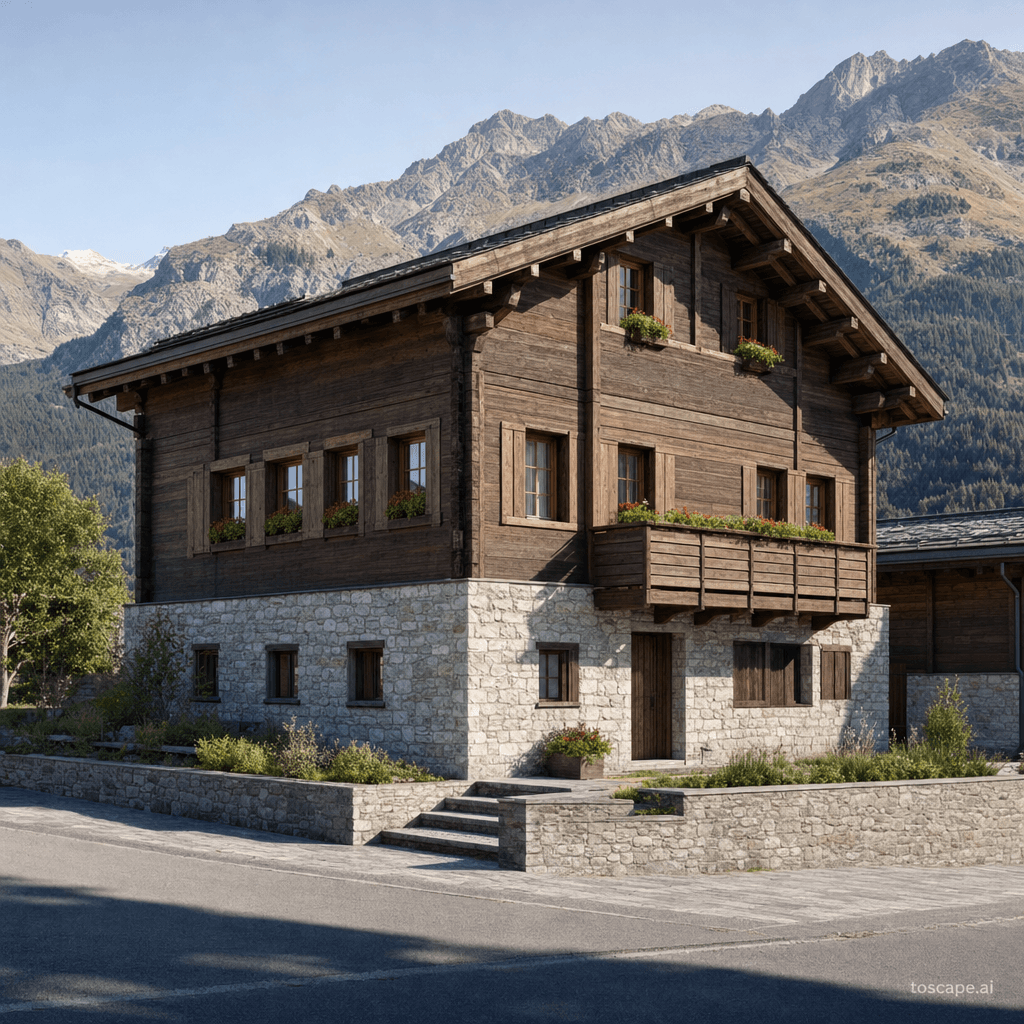
Context Snapshot
Valais/Wallis canton — Walser and Valaisan timber chalet architecture, raccard granaries, and alpine stone-base vernacular High alpine — extreme conditions: heavy winter snowfall (often several metres), intense summer UV radiation, large diurnal temperature range, steep mountain terrain (often 30-45° slopes).
Contemporary Relevance
Valais is useful today for residential, hospitality, civic, and place-branding work that needs Switzerland-specific character grounded in local massing, material tone, climate response, and settlement logic rather than generic international styling.
Use this style in Toscape
Explore Valais directly inside Toscape using the Facade Re-Style and Design Options workflows.
Open Valais in the galleryFrequently asked questions
What is Valais?
Valais is a regional architectural identity from Switzerland. Walser Timber Chalets, Darkened Larch & Alpine Stone-Base Vernacular Architecture.
What materials define Valais?
European larch (Larix decidua, mélèze/Lärche): the defining material — naturally durable, high resin content, weathers from warm golden-brown to deep silver-grey to near-black over decades — the dark Valais timber character. The larch is used raw, untreated — the natural resin preserves it.
What is the Valais color palette?
White, cream, pale sand, warm timber, and shadow-driven dark metal accents define the palette. The facade should stay bright and climate-aware rather than heavy, gray, or over-saturated.
Where does Valais come from?
Valais/Wallis canton — Walser and Valaisan timber chalet architecture, raccard granaries, and alpine stone-base vernacular High alpine — extreme conditions: heavy winter snowfall (often several metres), intense summer UV radiation, large diurnal temperature range, steep mountain terrain (often 30-45° slopes).
When should architects use Valais?
Valais is useful today for residential, hospitality, civic, and place-branding work that needs Switzerland-specific character grounded in local massing, material tone, climate response, and settlement logic rather than generic international styling.
How do you render Valais in Toscape?
Open Toscape on Windows, load your own photo, elevation, sketch, or CAD view, then apply the Valais reference from the built-in style library. The Facade Re-Style and Design Options workflows keep your project geometry and camera while shifting materials, proportion, and detailing toward Valais.