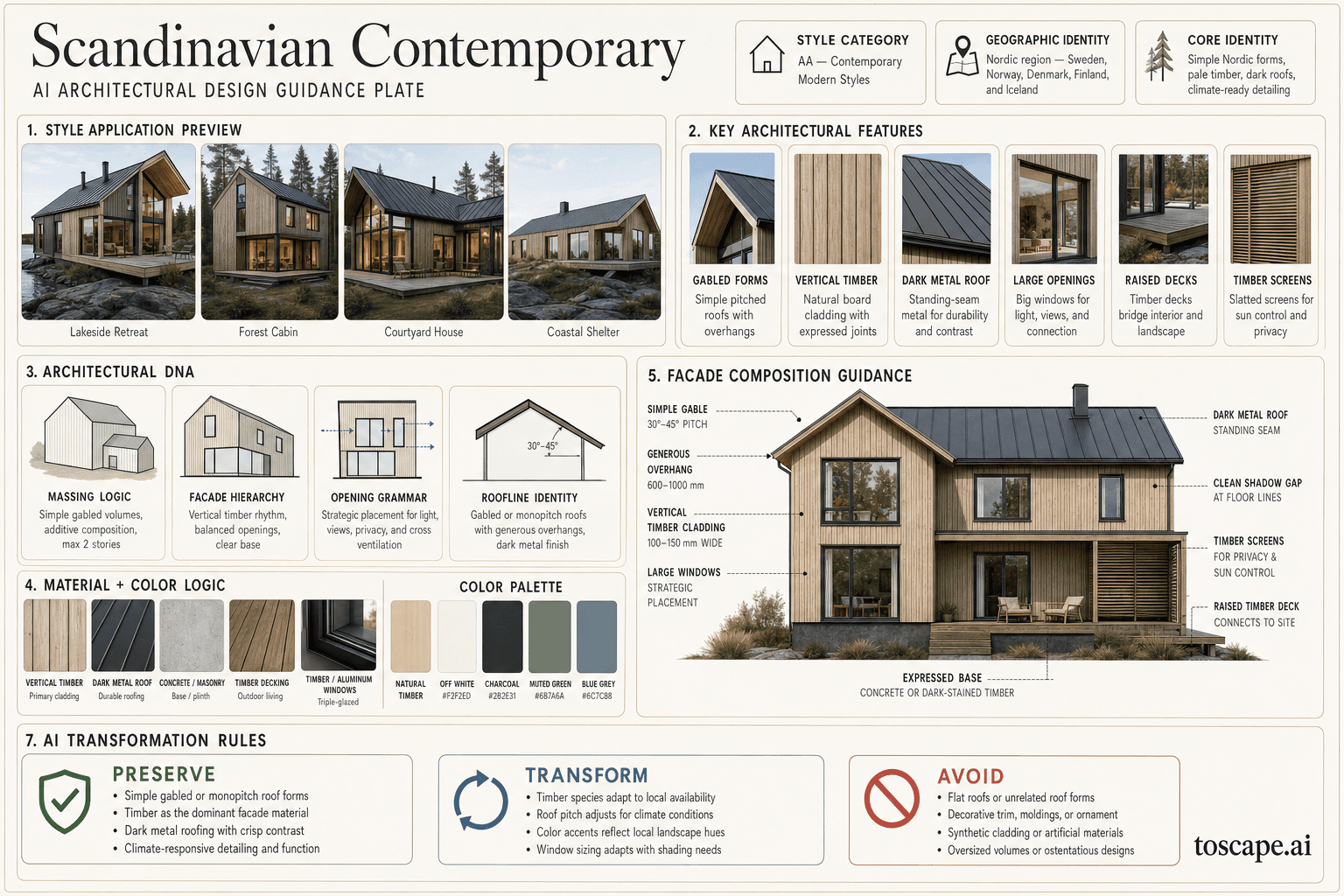
Scandinavian Contemporary
Nordic region - Sweden, Norway, Denmark, Finland, and Iceland. / Contemporary modern
Simple Nordic gabled volumes, pale timber, dark metal roofs, and practical climate-ready detailing.
Definition
Scandinavian Contemporary is a global architectural style within the contemporary modern. Simple Nordic gabled volumes, pale timber, dark metal roofs, and practical climate-ready detailing.
- Family
- Contemporary modern
- Origin
- Nordic region - Sweden, Norway, Denmark, Finland, and Iceland.
- Massing
- Volumes follow simple geometries. Rectangular plans with gabled roofs, or L-shaped compositions embracing outdoor spaces.
- Materials
- Exterior cladding: vertical tongue-and-groove timber (pine, spruce, larch, cedar) Roofing: dark standing-seam metal (zinc, steel.
- Palette
- Primary tones: natural timber (silver-grey weathered, honey, or pale), white Accent tones: dark charcoal, black, deep forest green, muted blue-grey Roof color: always dark.
- Climate response
- Nordic region. Sweden, Norway, Denmark, Finland, and Iceland.
Overview
Scandinavian Contemporary is a global architectural style rooted in Nordic region - Sweden, Norway, Denmark, Finland, and Iceland. Adapted globally in cool-temperate and maritime climates with strong seasonal light variation. Simple Nordic gabled volumes, pale timber, dark metal roofs, and practical climate-ready detailing. Straightforward, democratic, and quietly elegant.
Visual DNA
Massing & Form
Volumes follow simple geometries. rectangular plans with gabled roofs, or L-shaped compositions embracing outdoor spaces.
Facade Language
Facades are organized around the vertical rhythm of timber cladding boards. typically 100-150 mm wide with expressed joints.
Materials & Texture
Exterior cladding: vertical tongue-and-groove timber (pine, spruce, larch, cedar) Roofing: dark standing-seam metal (zinc, steel, or aluminum) Glazing: triple-glazed units in timber or timber-aluminum composite frames Base/plinth:...
Color Palette
Primary tones: natural timber (silver-grey weathered, honey, or pale), white Accent tones: dark charcoal, black, deep forest green, muted blue-grey Roof color: always dark. charcoal, dark grey, or black Interior: white walls, pale timber...
Ornament & Detail
Simple gabled or monopitch roof forms. the primary Scandinavian identifier.
Climate Response
Nordic region. Sweden, Norway, Denmark, Finland, and Iceland.
Landscape & Ground
Nordic region. Sweden, Norway, Denmark, Finland, and Iceland.
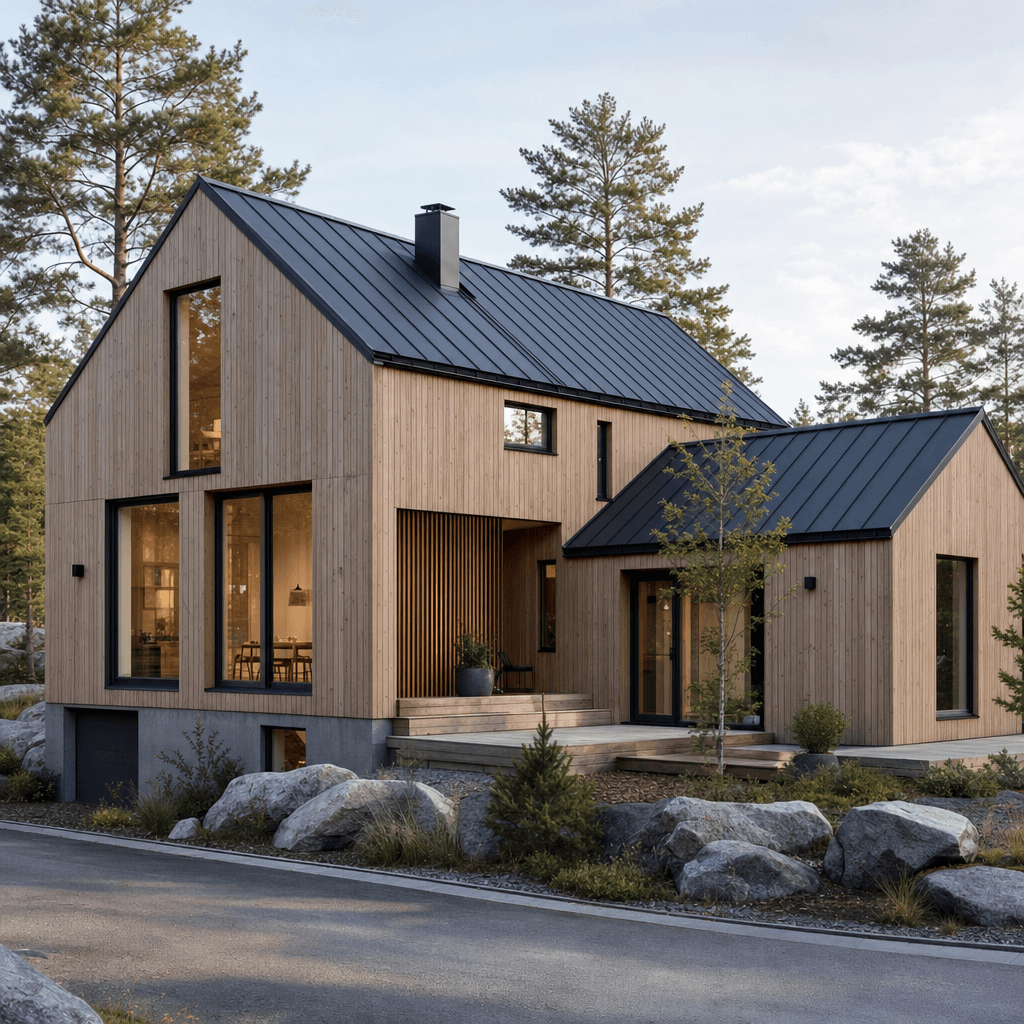
Reference elevation
Scandinavian Contemporary - characteristic facade composition within the contemporary modern.
Context Snapshot
Straightforward, democratic, and quietly elegant. Volumes follow simple geometries - rectangular plans with gabled roofs, or L-shaped compositions embracing outdoor spaces. Nordic region - Sweden, Norway, Denmark, Finland, and Iceland.
Contemporary Relevance
Today, Scandinavian Contemporary remains relevant wherever projects need contemporary modern cues without losing performance or contemporary usability. In Toscape it responds best when prompts emphasize volumes follow simple geometries - rectangular plans with gabled roofs, or l-shaped compositions embracing outdoor spaces. exterior cladding: vertical tongue-and-groove timber (pine, spruce, larch, cedar) roofing: dark standing-seam metal (zinc, steel, or...
Use this style in Toscape
Explore Scandinavian Contemporary directly inside Toscape using Facade Re-Style and design workflow prompts tuned for global architectural references.
Open Scandinavian Contemporary in the galleryFrequently asked questions
What is Scandinavian Contemporary?
Scandinavian Contemporary is a global architectural style within the contemporary modern. Simple Nordic gabled volumes, pale timber, dark metal roofs, and practical climate-ready detailing.
What materials define Scandinavian Contemporary?
Exterior cladding: vertical tongue-and-groove timber (pine, spruce, larch, cedar) Roofing: dark standing-seam metal (zinc, steel, or aluminum) Glazing: triple-glazed units in timber or timber-aluminum composite frames Base/plinth.
What is the Scandinavian Contemporary color palette?
Primary tones: natural timber (silver-grey weathered, honey, or pale), white Accent tones: dark charcoal, black, deep forest green, muted blue-grey Roof color: always dark. Charcoal, dark grey, or black Interior: white walls, pale timber.
What is the origin of Scandinavian Contemporary?
Straightforward, democratic, and quietly elegant. Volumes follow simple geometries - rectangular plans with gabled roofs, or L-shaped compositions embracing outdoor spaces. Nordic region - Sweden, Norway, Denmark, Finland, and Iceland.
When should architects use Scandinavian Contemporary?
Today, Scandinavian Contemporary remains relevant wherever projects need contemporary modern cues without losing performance or contemporary usability. In Toscape it responds best when prompts emphasize volumes follow simple geometries - rectangular plans with gabled roofs, or l-shaped compositions embracing outdoor spaces. Exterior cladding: vertical tongue-and-groove timber (pine, spruce, larch, cedar) roofing: dark standing-seam metal (zinc.
How do you render Scandinavian Contemporary in Toscape?
Open Toscape on Windows, load your own photo, elevation, sketch, or CAD view, then apply the Scandinavian Contemporary reference from the built-in style library. The Facade Re-Style and Design Options workflows keep your project geometry and camera while shifting materials, proportion, and detailing toward Scandinavian Contemporary.