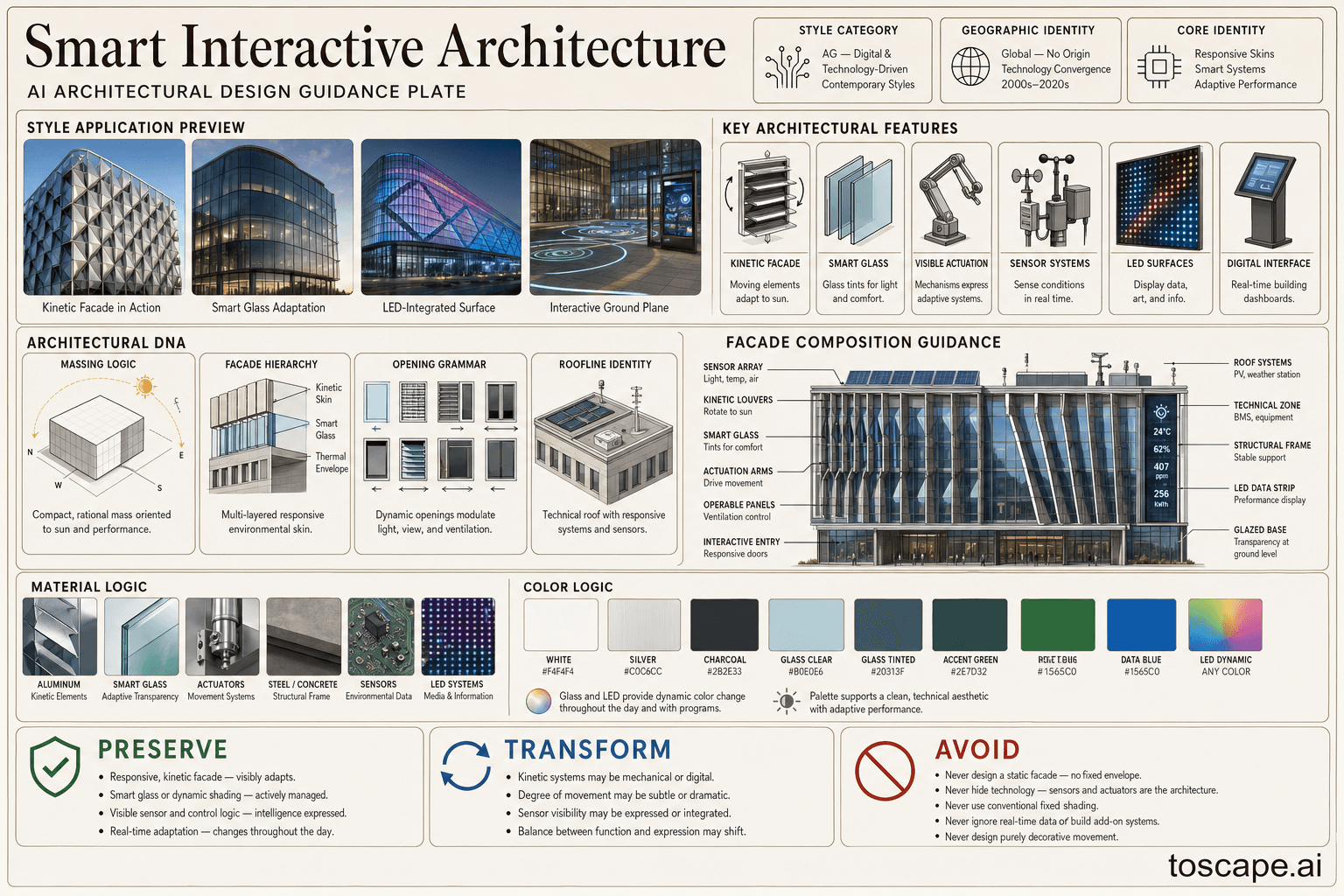
Smart Interactive Architecture
Global - Smart Interactive Architecture has no geographic origin. / Digital and technology
Responsive skins, kinetic louvers, smart glass, adaptive shading, and buildable interactive facade systems.
Definition
Smart Interactive Architecture is a global architectural style within the digital and technology. Responsive skins, kinetic louvers, smart glass, adaptive shading, and buildable interactive facade systems.
- Family
- Digital and technology
- Origin
- Global - Smart Interactive Architecture has no geographic origin.
- Massing
- Massing is typically rational and compact. The primary architectural drama is in the responsive envelope, not the overall form.
- Materials
- Kinetic facade elements: lightweight aluminum, stainless steel, or composite panels.
- Palette
- Primary tones: technical and adaptive. White, silver, charcoal, with dynamic colored elements The kinetic facade may be monochrome.
- Climate response
- Global. Smart Interactive Architecture has no geographic origin.
Overview
Smart Interactive Architecture is a global architectural style rooted in Global - Smart Interactive Architecture has no geographic origin. It emerged from the convergence of building automation, IoT sensors, responsive materials, and kinetic engineering in the 2000s-2020s. Pioneer projects include the Al Bahar Towers (Aedas, Abu Dhabi - responsive mashrabiya facade), Kiefer Technic Showroom (Ernst Giselbrecht, Austria - kinetic louver facade), and the Institut du Monde Arabe (Jean Nouvel, Paris - light-responsive diaphragm iris). It...
Visual DNA
Massing & Form
Massing is typically rational and compact. the primary architectural drama is in the responsive envelope, not the overall form.
Facade Language
The facade is the building's most important architectural element. a responsive, multi-layered environmental skin.
Materials & Texture
Kinetic facade elements: lightweight aluminum, stainless steel, or composite panels. actuated by electric motors or hydraulic systems Smart glass: electrochromic (SageGlass, View), SPD (suspended particle device), or polymer-dispersed...
Color Palette
Primary tones: technical and adaptive. white, silver, charcoal, with dynamic colored elements The kinetic facade may be monochrome.
Ornament & Detail
Responsive, kinetic facade. the building envelope must visibly adapt to environmental conditions.
Climate Response
Global. Smart Interactive Architecture has no geographic origin.
Landscape & Ground
Global. Smart Interactive Architecture has no geographic origin.
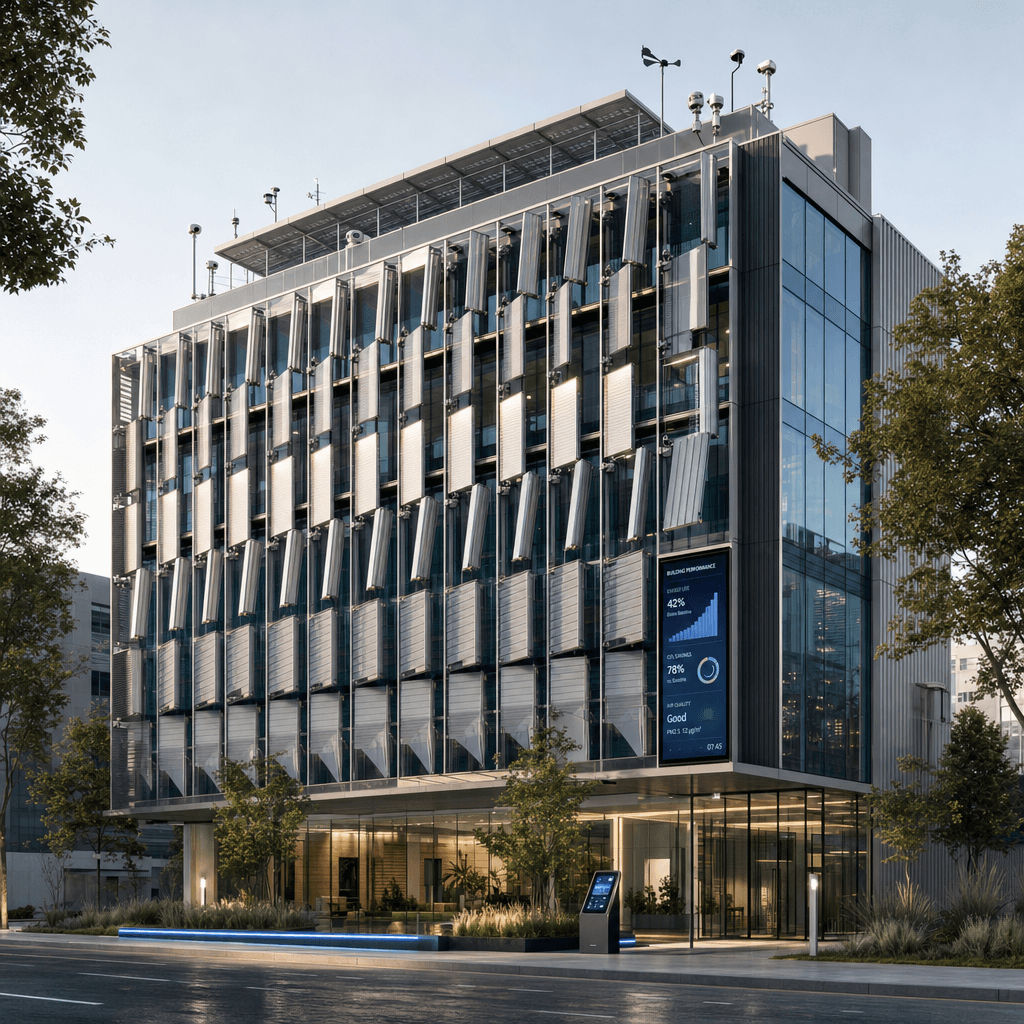
Reference elevation
Smart Interactive Architecture - characteristic facade composition within the digital and technology.
Context Snapshot
Dynamic, responsive, and technologically alive. Massing is typically rational and compact - the primary architectural drama is in the responsive envelope, not the overall form. Global - Smart Interactive Architecture has no geographic origin.
Contemporary Relevance
Today, Smart Interactive Architecture remains relevant wherever projects need digital and technology cues without losing performance or contemporary usability. In Toscape it responds best when prompts emphasize massing is typically rational and compact - the primary architectural drama is in the responsive envelope, not the overall form. kinetic facade elements: lightweight aluminum, stainless steel, or composite panels - actuated by electric motors or...
Use this style in Toscape
Explore Smart Interactive Architecture directly inside Toscape using Facade Re-Style and design workflow prompts tuned for global architectural references.
Open Smart Interactive Architecture in the galleryFrequently asked questions
What is Smart Interactive Architecture?
Smart Interactive Architecture is a global architectural style within the digital and technology. Responsive skins, kinetic louvers, smart glass, adaptive shading, and buildable interactive facade systems.
What materials define Smart Interactive Architecture?
Kinetic facade elements: lightweight aluminum, stainless steel, or composite panels. Actuated by electric motors or hydraulic systems Smart glass: electrochromic (SageGlass, View), SPD (suspended particle device), or polymer-dispersed.
What is the Smart Interactive Architecture color palette?
Primary tones: technical and adaptive. White, silver, charcoal, with dynamic colored elements The kinetic facade may be monochrome.
What is the origin of Smart Interactive Architecture?
Dynamic, responsive, and technologically alive. Massing is typically rational and compact - the primary architectural drama is in the responsive envelope, not the overall form. Global - Smart Interactive Architecture has no geographic origin.
When should architects use Smart Interactive Architecture?
Today, Smart Interactive Architecture remains relevant wherever projects need digital and technology cues without losing performance or contemporary usability. In Toscape it responds best when prompts emphasize massing is typically rational and compact - the primary architectural drama is in the responsive envelope, not the overall form.
How do you render Smart Interactive Architecture in Toscape?
Open Toscape on Windows, load your own photo, elevation, sketch, or CAD view, then apply the Smart Interactive Architecture reference from the built-in style library. The Facade Re-Style and Design Options workflows keep your project geometry and camera while shifting materials, proportion, and detailing toward Smart Interactive Architecture.