Zen Architecture
Rooted in Japanese Zen Buddhist tradition - adapted globally as an architectural philosop... / Asian contemporary
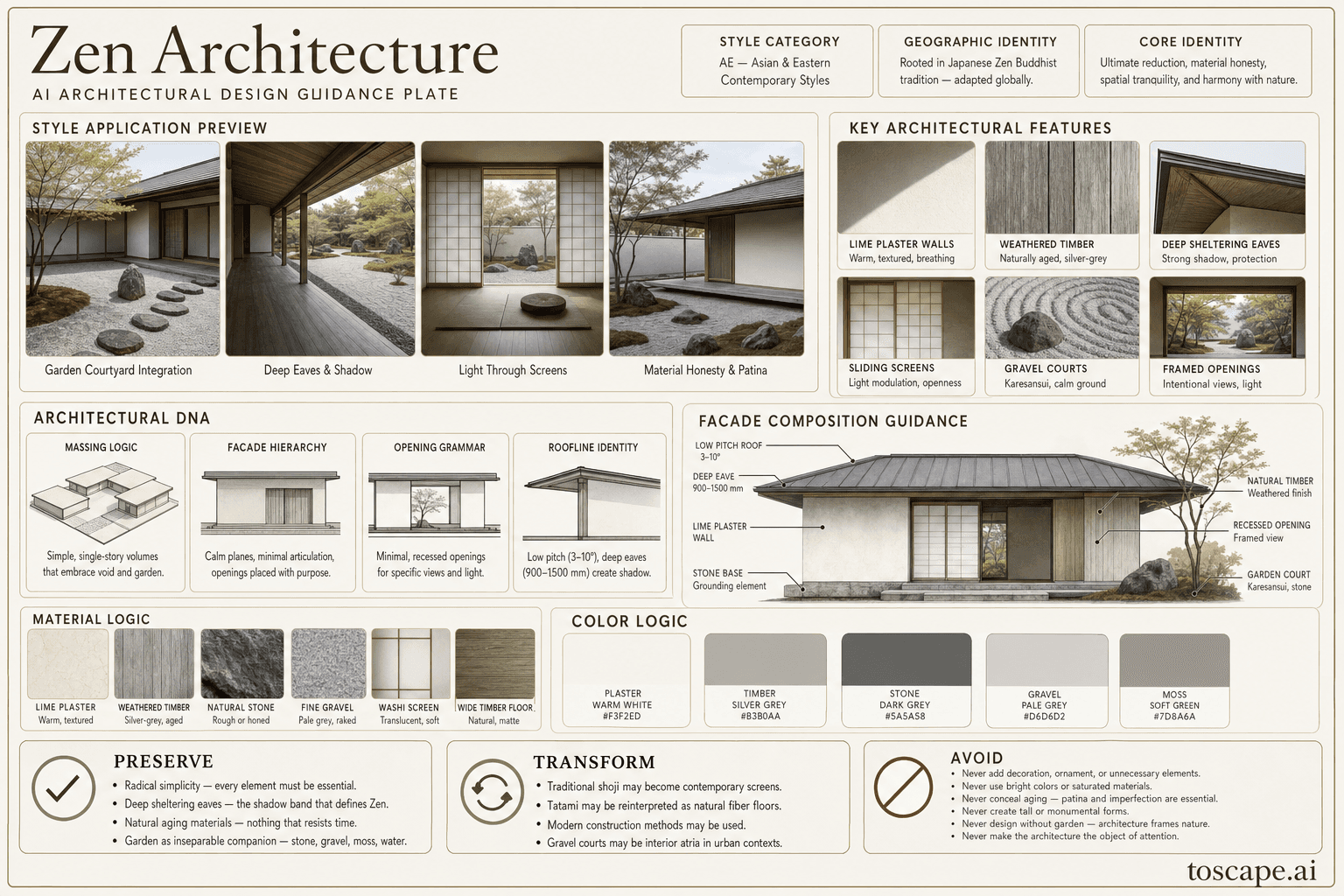
Lime plaster, weathered timber, stone, gravel courts, and the calmest possible roof expression.
Definition
Zen Architecture is a global architectural style within the asian contemporary. Lime plaster, weathered timber, stone, gravel courts, and the calmest possible roof expression.
- Family
- Asian contemporary
- Origin
- Rooted in Japanese Zen Buddhist tradition - adapted globally as an architectural philosop.
- Massing
- Massing is reduced to the simplest possible geometric volumes. A rectangle, a square, with the lowest possible roof.
- Materials
- Walls: lime plaster (shikkui). Warm white, breathing, textured by hand Timber: cedar or cypress.
- Palette
- Primary tones: warm plaster white, natural timber (silver-grey to warm brown) Stone tones: dark grey, muted green-grey, warm granite Gravel: pale grey.
- Climate response
- Rooted in Japanese Zen Buddhist tradition. Adapted globally as an architectural philosophy of ultimate reduction, material honesty, and spatial tranquility.
Overview
Zen Architecture is a global architectural style rooted in Rooted in Japanese Zen Buddhist tradition - adapted globally as an architectural philosophy of ultimate reduction, material honesty, and spatial tranquility. Applied in contemplative, residential, and retreat settings worldwide. Lime plaster, weathered timber, stone, gravel courts, and the calmest possible roof expression. Still, austere, and deeply peaceful.
Visual DNA
Massing & Form
Massing is reduced to the simplest possible geometric volumes. a rectangle, a square, with the lowest possible roof.
Facade Language
Facades are the most restrained possible. large planes of warm white plaster or naturally weathered timber with minimal articulation.
Materials & Texture
Walls: lime plaster (shikkui). warm white, breathing, textured by hand Timber: cedar or cypress.
Color Palette
Primary tones: warm plaster white, natural timber (silver-grey to warm brown) Stone tones: dark grey, muted green-grey, warm granite Gravel: pale grey, near-white The palette is nearly monochrome.
Ornament & Detail
Radical simplicity. every element must be essential; nothing decorative.
Climate Response
Rooted in Japanese Zen Buddhist tradition. adapted globally as an architectural philosophy of ultimate reduction, material honesty, and spatial tranquility.
Landscape & Ground
Rooted in Japanese Zen Buddhist tradition. adapted globally as an architectural philosophy of ultimate reduction, material honesty, and spatial tranquility.
Reference elevation
Zen Architecture - characteristic facade composition within the asian contemporary.
Context Snapshot
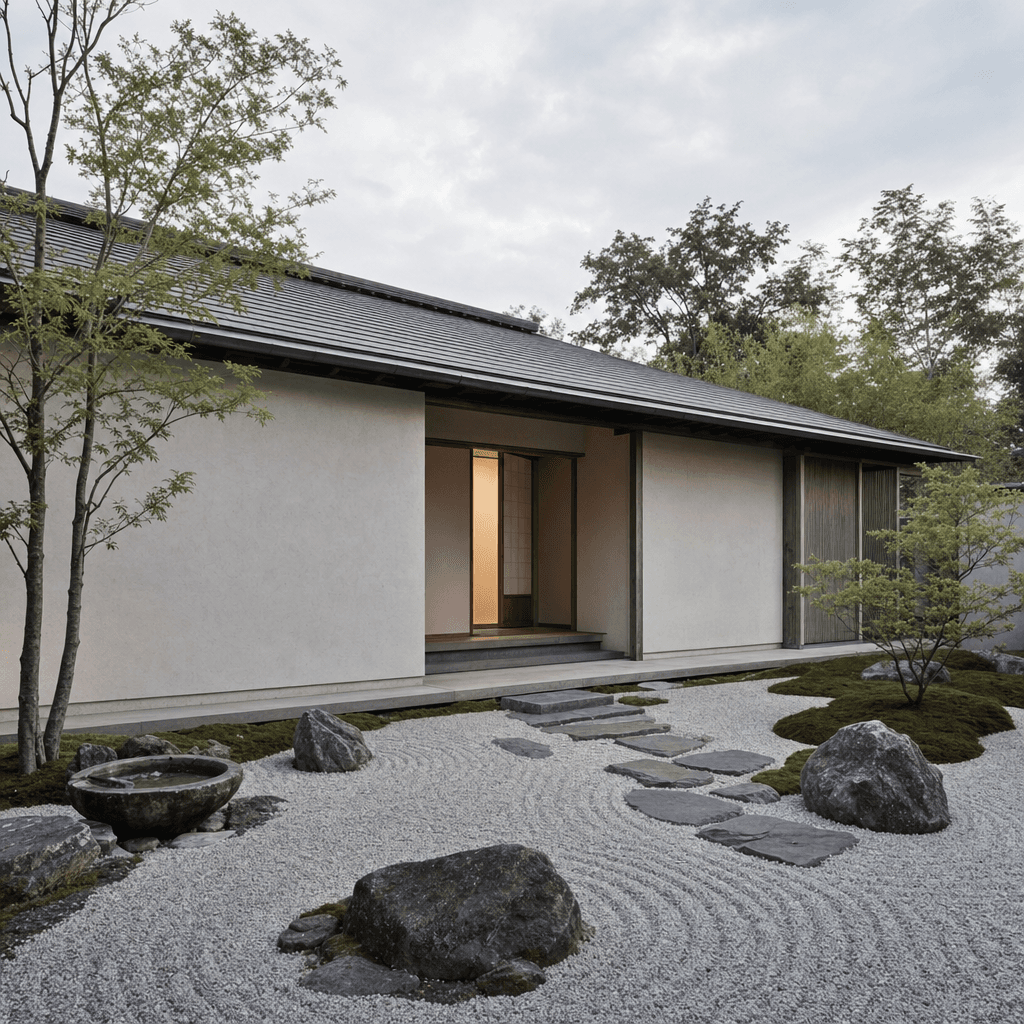
Still, austere, and deeply peaceful. Massing is reduced to the simplest possible geometric volumes - a rectangle, a square, with the lowest possible roof. Rooted in Japanese Zen Buddhist tradition - adapted globally as an architectural philosophy of ultimate reduction, material honesty, and spatial tranquility.
Contemporary Relevance
Today, Zen Architecture remains relevant wherever projects need asian contemporary cues without losing performance or contemporary usability. In Toscape it responds best when prompts emphasize massing is reduced to the simplest possible geometric volumes - a rectangle, a square, with the lowest possible roof. walls: lime plaster (shikkui) - warm white, breathing, textured by hand timber: cedar or cypress - allowed to weather naturally to silver-grey...
Use this style in Toscape
Explore Zen Architecture directly inside Toscape using Facade Re-Style and design workflow prompts tuned for global architectural references.
Open Zen Architecture in the galleryFrequently asked questions
What is Zen Architecture?
Zen Architecture is a global architectural style within the asian contemporary. Lime plaster, weathered timber, stone, gravel courts, and the calmest possible roof expression.
What materials define Zen Architecture?
Walls: lime plaster (shikkui). Warm white, breathing, textured by hand Timber: cedar or cypress.
What is the Zen Architecture color palette?
Primary tones: warm plaster white, natural timber (silver-grey to warm brown) Stone tones: dark grey, muted green-grey, warm granite Gravel: pale grey, near-white The palette is nearly monochrome.
What is the origin of Zen Architecture?
Still, austere, and deeply peaceful. Massing is reduced to the simplest possible geometric volumes - a rectangle, a square, with the lowest possible roof. Rooted in Japanese Zen Buddhist tradition - adapted globally as an architectural philosophy of ultimate reduction, material honesty, and spatial tranquility.
When should architects use Zen Architecture?
Today, Zen Architecture remains relevant wherever projects need asian contemporary cues without losing performance or contemporary usability. In Toscape it responds best when prompts emphasize massing is reduced to the simplest possible geometric volumes - a rectangle, a square, with the lowest possible roof.
How do you render Zen Architecture in Toscape?
Open Toscape on Windows, load your own photo, elevation, sketch, or CAD view, then apply the Zen Architecture reference from the built-in style library. The Facade Re-Style and Design Options workflows keep your project geometry and camera while shifting materials, proportion, and detailing toward Zen Architecture.