80s Retro
V02 / Retro / Postmodern / Pop Culture Classic / Early Contemporary
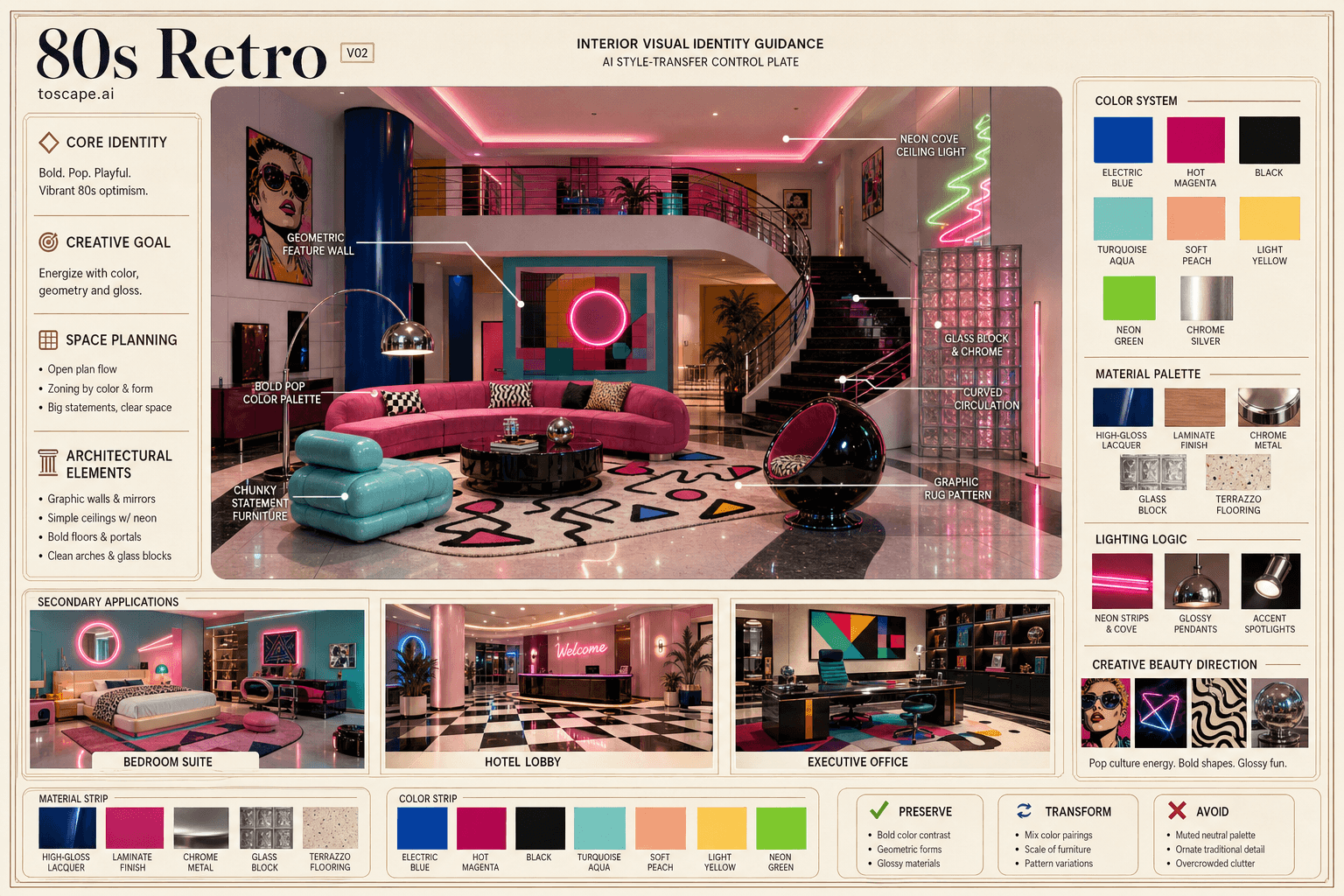
A vivid, playful interior style built on bold color, geometric shapes, high-gloss materials, and upbeat 1980s pop-culture energy.
Definition
80s Retro is an interior design style used for architectural visualization. A vivid, playful interior style built on bold color, geometric shapes, high-gloss materials, and upbeat 1980s pop-culture energy.
- Family
- Retro / Postmodern / Pop Culture Classic / Early Contemporary.
- Origin
- Emerging from late 1970s and early 1980s pop culture, Memphis Group design, early tech optimism, MTV visuals, and a reaction.
- Massing
- Bold rectangular and rounded shapes, chunky curves, arches, circles, zigzags, grids, stepped layers, and statement geometric furniture.
- Materials
- Slick, polished, glassy, smooth, tactile but not organic; velvet and short-pile carpet add selective softness.
- Palette
- Electric blue, bright magenta, turquoise, black, and chrome against white; highlight with neon green, pastel peach, and hints of red or yellow.
- Lighting
- Cove neon strips, hidden colored LED uplighting, track lights with colored shades, or geometric ceiling fixtures.
Try it free
Render your own project in this style
Upload one photo of your own project and Interior Render keeps the geometry and camera while carrying the 80s Retro language into materials, proportion, and detail. Three free renders, no account needed.
Open Interior Render - freeOverview
80s Retro is an interior design style defined by A vivid, playful, and graphical interior style built on bold geometric shapes, striking patterns, plastic and lacquered materials, saturated color contrasts, and a distinct sense of 80s optimism and fun. To evoke a playful, youthful spirit through color, geometry, and high-contrast materiality, creating an inviting but electrifying space.
Visual DNA
Spatial Feeling
Upbeat, playful, vibrant, bright, open yet visually energetic.
Form Language
Bold rectangular and rounded shapes, chunky curves, arches, circles, zigzags, grids, stepped layers, and statement geometric furniture. Oversized elements and volumetric furniture work well; composition alternates between blocky and...
Composition
Open-plan layouts with punctuated zones defined by bold furniture, rugs, graphical wall features, or raised/lowered platforms. Sculptural sofas, geometric feature walls, neon lighting, unique statement chairs, pop-art installations, or...
Interior Elements
Smooth or glossy painted walls in graphic color fields; feature walls with stripes, grids, or geometric patterns; mirrors, glass block, or statement wallpaper used sparingly. Ceilings are kept generally simple and flat-optionally with...
Color System
Electric blue, bright magenta, turquoise, black, and chrome against white; highlight with neon green, pastel peach, and hints of red or yellow. Bold "pop" colors are balanced by crisp neutrals (white, black, grey); three or more vivid...
Material Palette
Slick, polished, glassy, smooth, tactile but not organic; velvet and short-pile carpet add selective softness. Glossy plastics and lacquer anchor big furniture and joinery; mirrors and chrome add highlights; neon/LED and velvet are for...
Lighting Logic
Cove neon strips, hidden colored LED uplighting, track lights with colored shades, or geometric ceiling fixtures. Juxtapose bright daylight with dramatic nighttime neon or colored shadows; target colored ambient glows for bold depth....
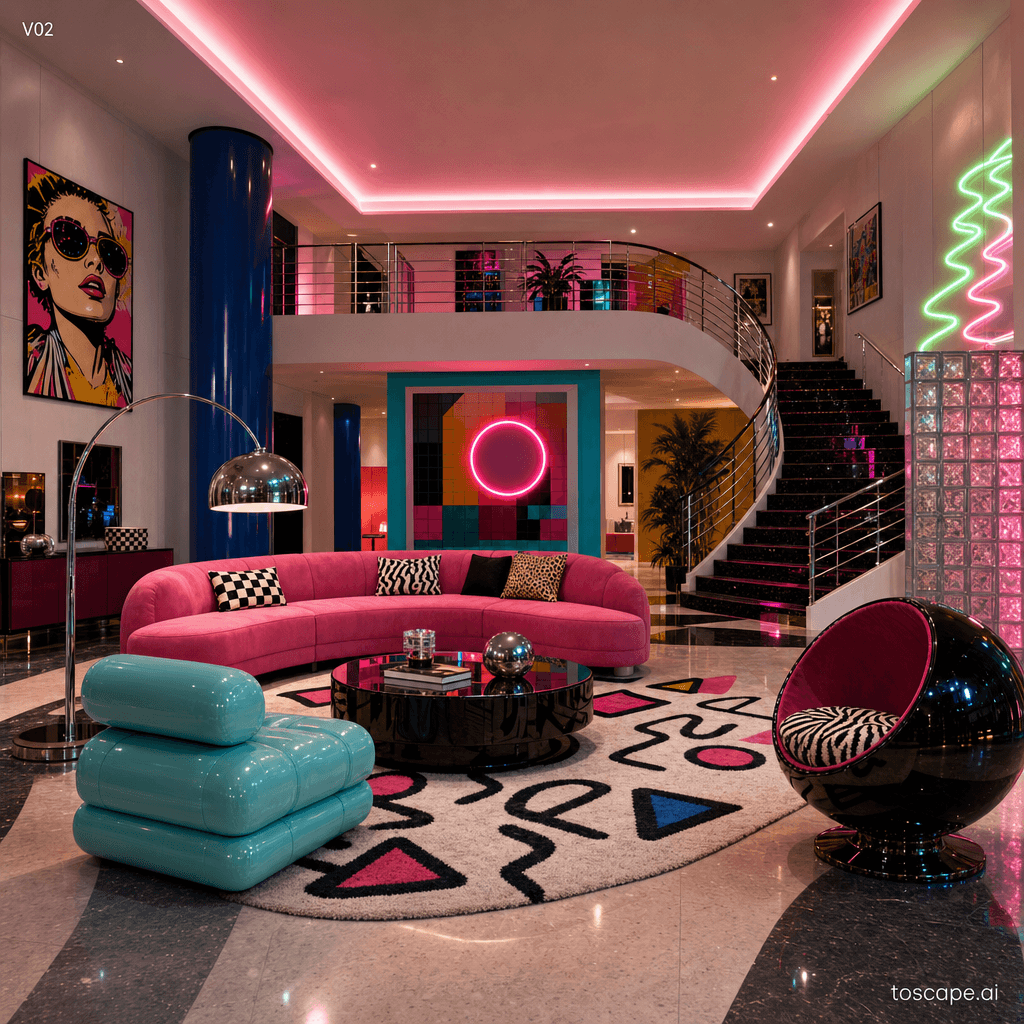
Interior reference image
80s Retro composition, material palette, furniture language, and lighting direction.
Context Snapshot
Emerging from late 1970s and early 1980s pop culture, Memphis Group design, early tech optimism, MTV visuals, and a reaction... Selective residential feature rooms, boutique hotels, retail pop-ups, edgy offices, and photo studios looking for retro impact. Lean into graphic geometry, strong color, lacquer and mirror finishes, contemporary furniture with 80s lines, and precise curation; avoid literal pastiche or clutter.
Composition And Planning
Open-plan layouts with punctuated zones defined by bold furniture, rugs, graphical wall features, or raised/lowered platforms. Encourages movement through visual cues: lines, color paths, dynamic lighting, and statement-piece alignment. Use a wide camera angle at slightly below eye level to capture strong perspective lines, foreground-to-background geometry, and at least one clear color-contrasted hero element.
Furniture Grammar
Chunky, geometric, tubular or rounded, with block legs or strong curves. Floating or centralized layouts that encourage visual drama; avoid wall-hugging except where built-ins are graphic features. - Tubular steel or lacquered sofa (a la Memphis) - Mirrored pedestal coffee table - Glossy lacquered credenza - Neon-accented club chair
Creative Direction
A sculptural living room with hero turquoise sofa, magenta lacquered table, chrome pendant, geometric pastel rug, pop-art mural, and neon accents, anchored by drama and playful polish. Crisp, curated compositions with 2-3 dominant colors, balanced geometric furniture, sharp mirrors, clean negative space, and editorial neon lighting. Deep-contrasted nighttime mood, with glowing neon, color-reflecting mirrors, polished black surfaces, and vibrant, saturated highlights. - Impeccable lacquer and mirror quality - Perfect color saturation and placement - Custom neon and polished upholstery - Controlled, art-directed accessory curation
Best Project Applications
- Creative lounges, boutique hotel lobbies, entertainment rooms, vibrant offices, retail pop-ups.
Preserve, Transform, Avoid
Preserve
- Bold color blocking and vivid geometry as main visual anchors.
- High-gloss, plastic, chrome, and mirrored surfaces.
- Playful layout with strong focal elements and open negative space.
- Neon or LED lighting accents and pop art decor.
Transform
- Refine pattern and layout for contemporary editorial beauty.
- Use richer material quality (lacquer, velvet, chrome) for premium feel.
- Curate accessories for sophistication, not kitsch.
- Edit palette intensity for harmony without losing signature vibrancy.
Avoid
- Murky neutrals or heavy earth tones.
- Scandinavian or rustic furniture/materials.
- Over-cluttered or kitschy random 80s objects.
- Flat, all-white, or entirely pastel interiors.
- Traditional architectural ornament or paneling.
Frequently asked questions
What is 80s Retro?
80s Retro is an interior design style used for architectural visualization. A vivid, playful interior style built on bold color, geometric shapes, high-gloss materials, and upbeat 1980s pop-culture energy.
What materials define 80s Retro?
Slick, polished, glassy, smooth, tactile but not organic; velvet and short-pile carpet add selective softness. Glossy plastics and lacquer anchor big furniture and joinery; mirrors and chrome add highlights.
What is the 80s Retro color palette?
Electric blue, bright magenta, turquoise, black, and chrome against white; highlight with neon green, pastel peach, and hints of red or yellow. Bold "pop" colors are balanced by crisp neutrals (white, black, grey); three or more vivid.
What is the origin of 80s Retro?
Emerging from late 1970s and early 1980s pop culture, Memphis Group design, early tech optimism, MTV visuals, and a reaction... Selective residential feature rooms, boutique hotels, retail pop-ups, edgy offices, and photo studios looking for retro impact. Lean into graphic geometry, strong color, lacquer and mirror finishes, contemporary furniture with 80s lines, and precise curation; avoid literal pastiche or clutter.
When should architects use 80s Retro?
A sculptural living room with hero turquoise sofa, magenta lacquered table, chrome pendant, geometric pastel rug, pop-art mural, and neon accents, anchored by drama and playful polish. Crisp, curated compositions with 2-3 dominant colors, balanced geometric furniture, sharp mirrors, clean negative space, and editorial neon lighting.
How do you render 80s Retro in Toscape?
In Toscape, pick the 80s Retro reference from the style library and run it over your own image - a site photo, elevation, sketch, or CAD view. The Interior Design workflow hold the geometry and camera of the project and move materials, proportion, and detailing toward 80s Retro.
Related interior design styles
- Retro FuturismA playful, optimistic, and visually bold interior style inspired by past visions of the future-defined.
- Vintage EclecticA curated, expressive interior style defined by layered vintage furniture, eclectic artwork, textured textiles.
- 70s RevivalA vibrant, expressive retro interior style with iconic curves, tactile surfaces.
- Memphis DesignA playful, graphic postmodern style with bold geometry, vibrant color, statement furniture, and irreverent 80s-inspired pattern.
- Pop Art InteriorA bold, art-driven interior style marked by saturated color blocking, playful furniture.
Use this style in Toscape
Explore 80s Retro inside Toscape using interior-focused rendering workflows and gallery references.
Open interior references